
Last updated August 25, 2026
Free on-site gate assessment - hinges, posts, and your LiftMaster or Nice gate operator checked before anything is quoted
The assessment is free and the quote is the invoice.

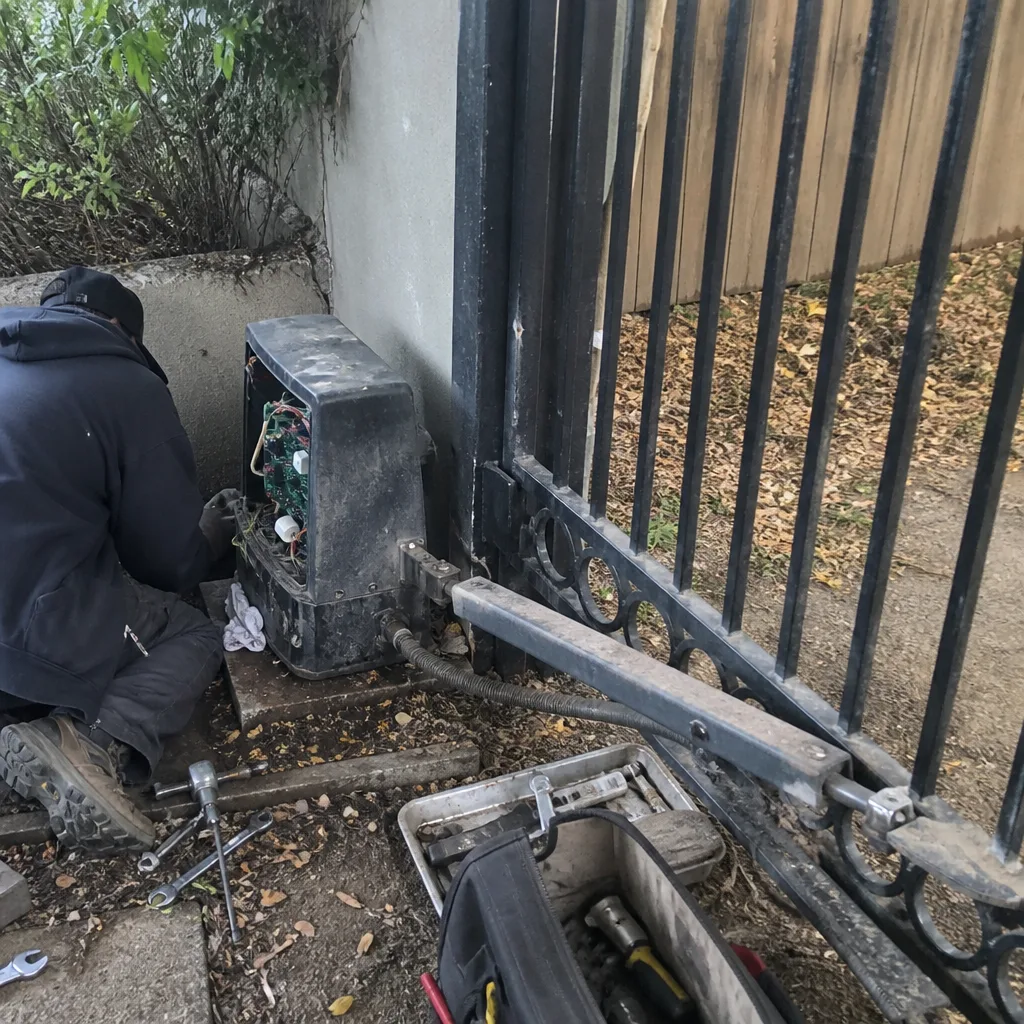 Before
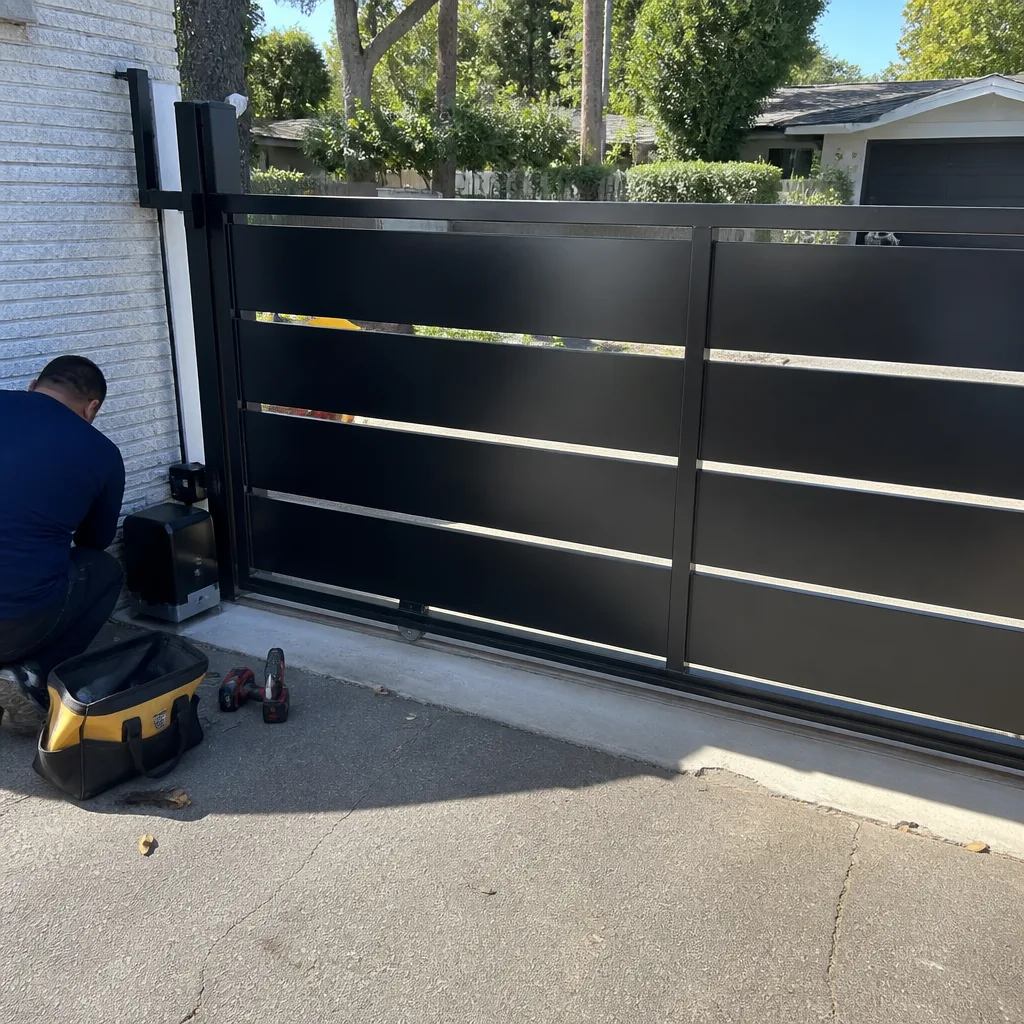 After
After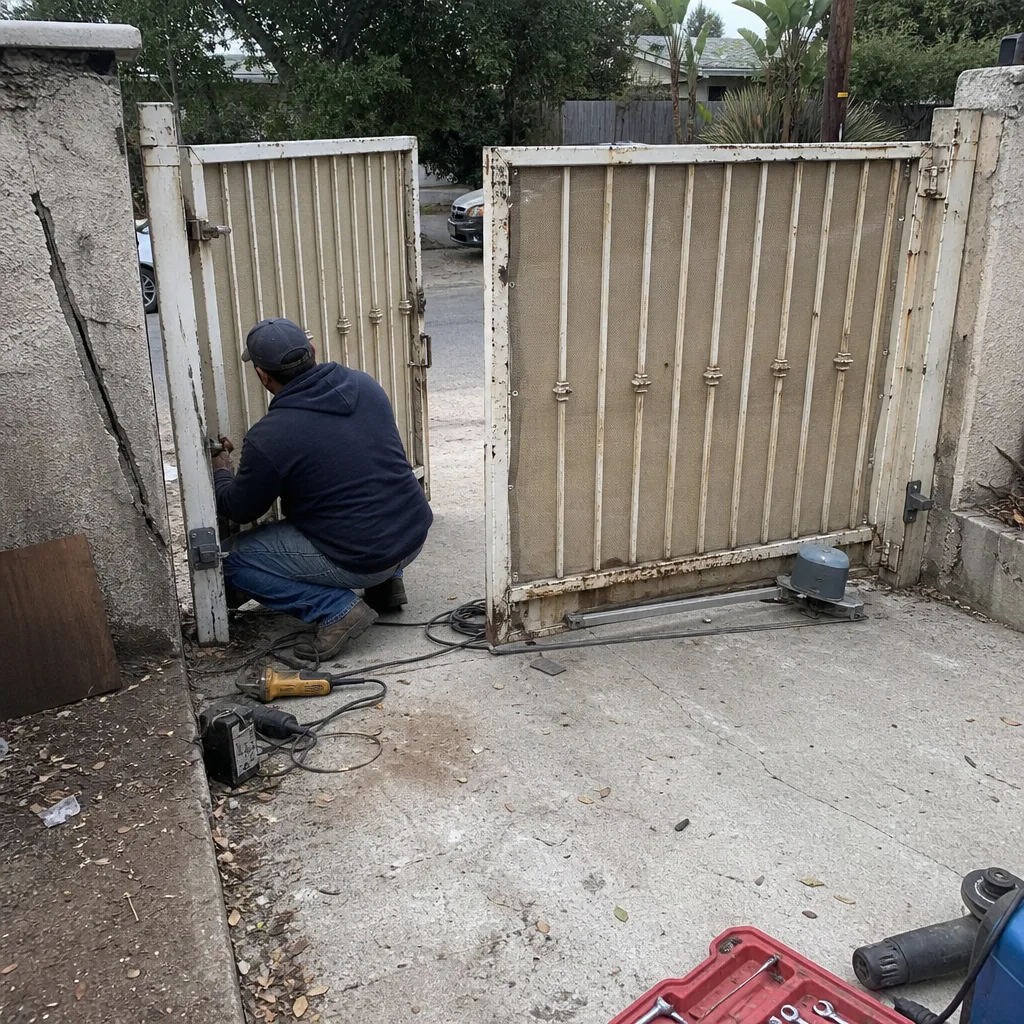 Before
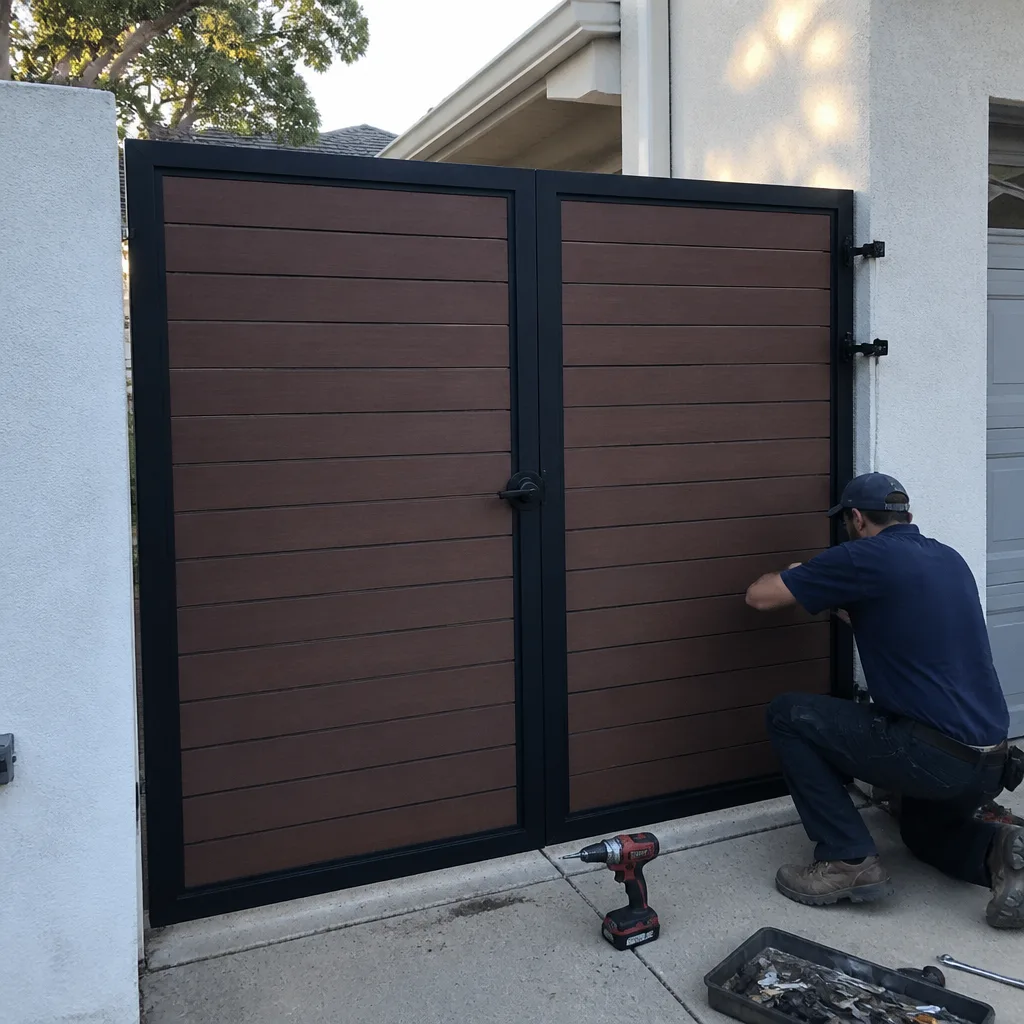 After
After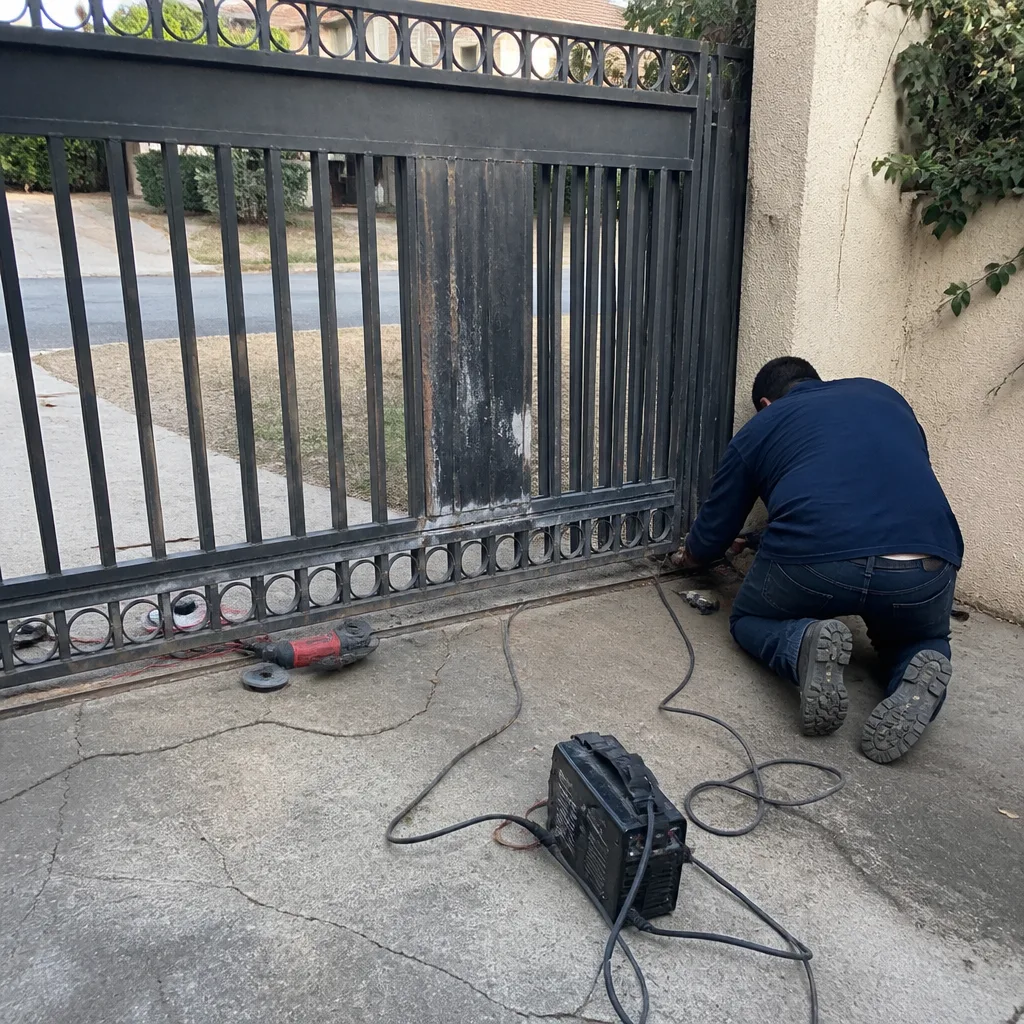 Before
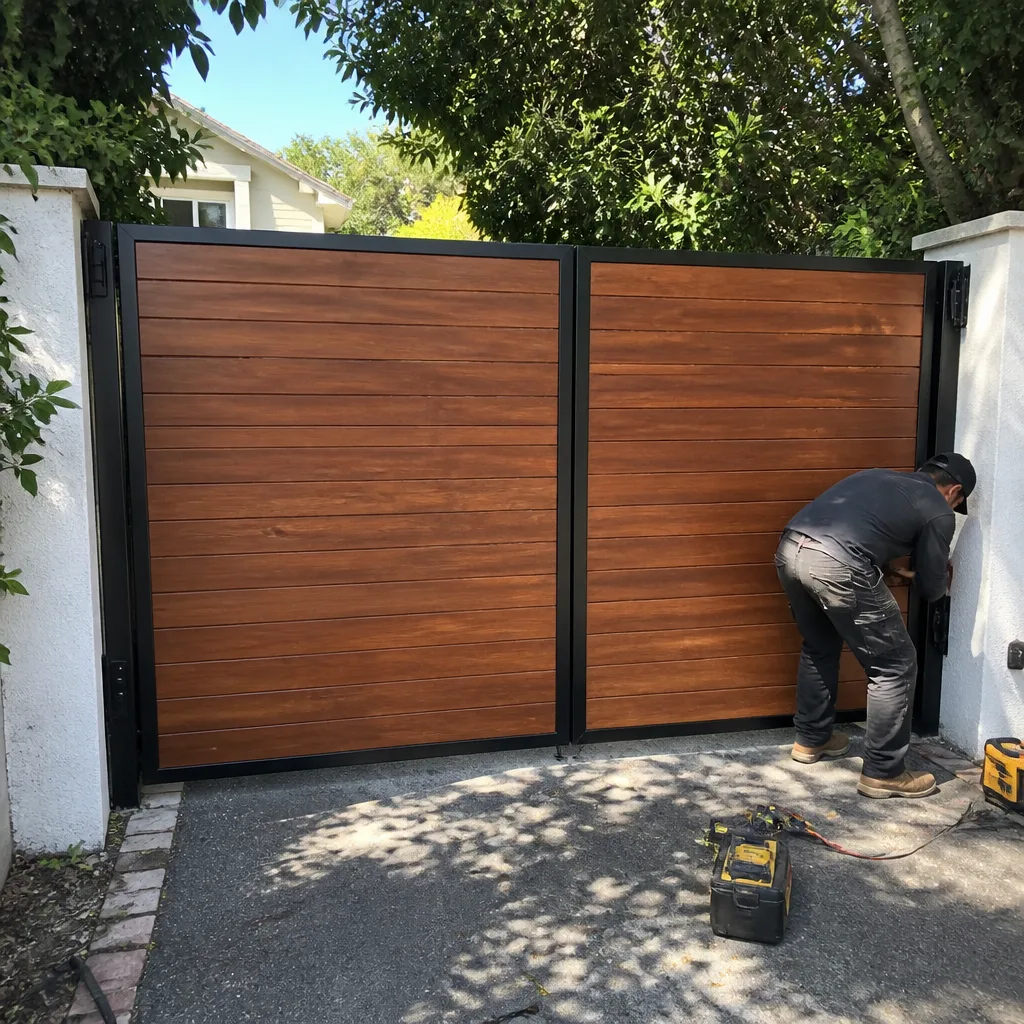 After
AfterGate Repair Warning Signs: A Sherman Oaks Homeowner’s Reference Guide
Most Sherman Oaks driveway gates don’t fail without warning. They telegraph their intentions for weeks or sometimes months before the day they refuse to open at all. The trouble is, the warnings are quiet: a half-second hesitation, a faint scrape of metal, a motor that sounds just slightly more labored than it did last spring. This guide is a plain-language reference for what those warnings mean, which ones you can safely observe and which ones demand a call to a gate specialist, and what a repair should actually cost in the San Fernando Valley market. We’ve been fixing gates in Sherman Oaks long enough to know that the homeowners who catch these signs early are the ones who never find themselves trapped in their own driveway at 7 a.m. on a Monday.
Quick Answer
The most common warning signs that a Sherman Oaks driveway gate needs repair are: the gate moves slower than it used to, it hesitates or stops mid-travel, it screeches or grinds while moving, the gate leans visibly, the posts show rust blooms at the base, the opener hums but the gate doesn’t move, or the safety sensors stop reversing the gate properly. Repair costs in Sherman Oaks typically run between $180 and $650 depending on whether the issue is mechanical, electrical, or structural. A gate showing any of these signs should be evaluated before a small fix becomes a full replacement.
Table of Contents
- A Gate That Moves Slower Than It Used To
- The Gate That Hesitates or Stops Mid-Travel
- Screeching, Grinding, and Groaning Noises
- A Gate That Leans, Droops, or Scrapes the Ground
- Rust at the Base of the Posts
- The Opener Hums But Nothing Moves
- Safety Sensors That Don’t Reverse the Gate
- Common Mistakes to Avoid
- When to Call a Professional
- Frequently Asked Questions
A Gate That Moves Slower Than It Used To
A Sherman Oaks gate that takes 14 seconds to close when it used to take 8 is not being lazy. It’s telling you something specific about its mechanical health. Slowing gate travel is one of the earliest and most reliable warning signs of a developing problem, and it rarely resolves on its own.
In our experience, slower gate movement in this part of the San Fernando Valley usually points to one of four root causes. The most common is worn or dry rollers and hinges, which increase friction and force the motor to work harder. The second is a motor that’s losing torque, which happens as opener capacitors age and degrade in Southern California heat. The third is low hydraulic fluid or a failing hydraulic pump on hydraulic operator systems. The fourth, and the one we’d want any Sherman Oaks homeowner to take seriously, is a gate that has come out of square due to shifting soil or a failing weld, which puts lateral load on the motor every single cycle.
What you can do: stand beside the gate while it operates and count the seconds from full-open to full-close. Then watch the gate from the edge, sighting down the top rail, to see if the frame stays level. A gate that slows because of dry rollers is a maintenance item. A gate that slows because the frame is racking will, left alone, eventually destroy the motor, the hinge plates, or both. If the slowdown arrived gradually over months, plan for a service call. If it arrived suddenly after a rainstorm, the soil under the gate posts may have shifted, and we’d recommend having it looked at before the next heavy winter rain.
One Sherman Oaks specific note: the clay-heavy soil in the hillside neighborhoods from Chandler Estates up toward Longridge expands and contracts aggressively with moisture. Gates on those slopes experience more frame movement than gates on the flatlands south of Ventura Boulevard, and we inspect for it accordingly.
The Gate That Hesitates or Stops Mid-Travel
Hesitation is different from a general slowdown. A hesitating gate moves at normal speed, stops for a beat, perhaps reverses, then completes its cycle. It might do this only when it’s cold in the morning, or only when two cars have passed through in quick succession, or only on rainy days. Hesitation of this kind is the canary in the coal mine for gate automation systems.
The most common causes we diagnose on Sherman Oaks properties, in order of frequency:
- Obstruction sensor misalignment or failure: the gate’s safety beam or edge sensor reads a phantom obstruction and reverses or stops the gate.
- Capacitor failure in the opener motor: the motor can’t produce full starting torque, so it stutters on re-start.
- Limit switch drift: the opener no longer knows precisely where open and closed are, so it stops partly through travel.
- Interference on the receiver board: wireless signals from nearby Sherman Oaks homes, particularly in multi-unit hill developments, can interfere with older receivers.
- Intermittent wiring faults: a connection that’s corroded or loose makes contact sometimes and not others, often tied to temperature and humidity.
Here’s a simple diagnostic sequence any homeowner can follow before calling us:
- Watch the gate through three complete open-close cycles from a safe distance, without operating any remote or keypad.
- Note whether the hesitation happens at the same point in travel every time. Same-point hesitation suggests a limit switch or physical obstruction issue. Random-point hesitation suggests an electrical or sensor issue.
- Check the area around the photoelectric sensors for overgrown bougainvillea, stacked garden equipment, or a leaning yard sign. Sherman Oaks landscaping grows fast in the summer, and a sensor blocked by a single branch tip will stop a gate intermittently.
- Operate the gate with the manual release engaged, if you know how to do so safely, and feel for resistance points along the travel path.
- Call a gate technician if the hesitation persists after these checks, because an opener that hesitates today will refuse to open entirely soon, and in our experience that day tends to be the morning of an important appointment.
On the automation side, we service nine brands across Sherman Oaks: LiftMaster, FAAC, BFT, Linear, Viking, Ghost Controls, DoorKing, Elite, and Mighty Mule. If your opener is a FAAC or a BFT that’s ten or more years old, intermittent hesitation is often the first sign of a main board component wearing out, and it’s worth having us test it before the board fails completely.
Screeching, Grinding, and Groaning Noises
Every gate makes some noise. The question is whether the noise is the steady hum a gate has made for years, or a new sound. New sounds are the gate doing something it hasn’t done before, and in mechanical systems, new sounds are almost never good news.
A screeching or high-pitched metallic squeal typically comes from metal-on-metal contact at the hinge points or roller tracks. On many Sherman Oaks gates, the hinge bearings were installed decades ago, and the grease inside them has hardened into something closer to clay than lubricant. This is a relatively inexpensive fix early: the hinges get cleaned and re-greased, worn rollers get replaced, and the noise goes away. Left alone for another year, the hinge pins wear oval holes in the plates, and the fix becomes a weld-and-reinforce job instead of a lubrication job.
A grinding noise, lower and more uneven than a squeal, usually means something is physically dragging. Common causes include a wheel that’s seized and being dragged through the track, a gate frame that’s sagged and is scraping the driveway surface, or a chain drive that’s lost tension and is jumping teeth on the sprocket. In Sherman Oaks, where many estates have long steel gates on rolling track systems, we see seized wheels more often on properties where the track sits in a low spot that collects irrigation runoff.
A groaning sound from the motor itself, especially on older hydraulic operators, suggests the pump is struggling against resistance. This can be low fluid, a dirty filter, or the early stages of pump failure. If you have a BFT or Linear hydraulic opener and it’s started to groan, have it checked before the next heat wave. Hydraulic systems run hot in summer, and a unit that’s already struggling will fail faster in August than in December.
A Gate That Leans, Droops, or Scrapes the Ground
A leaning gate is the one warning sign that no homeowner should ignore even for a week. Unlike a noisy hinge or a slow motor, a leaning gate is a structural problem, and structural problems worsen geometrically: each day the gate leans further, which puts more load on the remaining sound components, which accelerates the leaning.
On a single-swing gate, the lean is almost always in one of three places: the post itself has loosened in the soil, the hinge plates are bending or tearing at the weld, or the frame welds have cracked somewhere along the top or bottom rail. In Sherman Oaks, the post-loosening failure is especially common on hillside lots where the gate post is set into a slope and decades of rain have slowly undermined the concrete footing. We’ve seen posts lean a full six degrees out of plumb in two rainy seasons.
On a sliding or rolling gate, the signs are different: the gate rides lower at one end, scrapes the concrete at the middle of travel, or the top of the gate tilts visibly away from vertical. These are signs of roller carriage failure, track subsidence, or frame racking.
Here’s how to assess a leaning gate safely:
- Stand at the hinge end of the gate and sight down the top rail toward the latch end. The top rail should run dead level.
- Measure the gap between the bottom of the gate and the driveway at three points: hinge end, middle, latch end. If the gap varies by more than an inch, something is wrong.
- Look at the bottom of the gate post itself, where it meets the concrete. Fresh cracks in the concrete, or soil that’s visibly washed away around the base, means the post is moving.
- Inspect the welds where the gate frame meets the hinge stile. A crack in a weld often looks like a dark hairline against a lighter painted surface, and it may only open up when the gate is in motion.
Do not attempt to jack a leaning gate back into position. A gate under structural load, especially a steel one, can shift suddenly and without warning. This is a job for a professional with proper stands, blocking, and welding equipment. We regularly straighten and reinforce leaning steel and iron gates in Sherman Oaks, fabricating new hinge plates and welding them in place, then re-aligning the gate so it swings true again.
Rust at the Base of the Posts
Rust is a fact of life in a coastal-adjacent climate, and Sherman Oaks gets enough morning marine layer and winter rain to keep rust active year-round. The question is not whether your steel gate post has rust on it. The question is whether that rust is cosmetic or structural.
Surface rust is orange-brown, flat, and powdery. It sits on top of the metal and can be sanded away. Structural rust is darker, sometimes almost black, and it flakes in layers. When you tap structural rust with a hammer, it sheds chunks. On a gate post, structural rust typically begins where the post meets the concrete, because that junction stays damp longer than the rest of the post after rain or sprinkler runoff and because water pools in the slight depression around the post base before evaporating.
The progression we see on older Sherman Oaks gates goes like this: the paint fails at the post base within ten to fifteen years, surface rust forms within five years after that, and structural rust becomes a real concern at the twenty-five year mark. Many of the homes south of Ventura Boulevard were developed in the 1960s and 1970s, which means their original gates, if still in place, are now at the age where post-base rust needs a professional evaluation.
The repair depends on how far the rust has penetrated. If the post is still sound, the fix is straightforward: grind away the rust, treat the bare metal with a rust converter, prime, and paint. If the rust has thinned the post wall, the post needs reinforcement or replacement, and that’s a fabrication and welding job. Waiting to address rust at the base of a gate post is like waiting to address a cavity: it only gets more expensive the longer it’s ignored.
The Opener Hums But Nothing Moves
You press the remote, or you enter the code on the keypad, and you hear the opener make its usual electrical hum, but the gate itself stays put. This is a specific failure mode, and it narrows the problem down considerably.
When an opener hums but produces no gate movement, the motor is receiving power and attempting to run. The problem sits somewhere between the motor and the gate itself. The most likely causes:
- Failed start capacitor: the motor can’t produce enough torque to begin turning the drive mechanism. This is the single most common cause we find on aging openers in Sherman Oaks, and it often produces a characteristic repeated clicking or buzzing as the capacitor tries and fails to discharge.
- Broken chain or belt: the drive connection between motor and gate has parted. The motor runs, the gate doesn’t move, and you’ll often find a length of chain or belt hanging slack inside the operator housing.
- Manual release engaged: someone pulled the manual release to open the gate by hand during a power outage and the mechanism wasn’t re-engaged properly. The opener runs, but it’s decoupled from the gate.
- Stripped drive gear: the nylon or steel gear inside the operator has lost teeth, so the motor spins against nothing. This is common on older Viking and Ghost Controls units that have seen heavy cycle counts.
- Seized wheel or roller: the gate is physically stuck, and the motor is humming against a load it can’t move. The hum will be lower and more strained than the normal operating sound.
- Start the gate closing from the keypad or remote, then walk through the closing path at the point where the photo beam crosses it. The gate should stop and reverse within a second or two.
- If your gate has a contact edge sensor, let the gate close against a cardboard box you’ve placed in its path. The gate should reverse on contact without crushing the box.
- Check that the photo eyes are clean and their indicator lights are lit. Sherman Oaks dust and pollen can coat the lenses quickly, especially during Santa Ana wind season.
- Look for any physical damage to the sensor housings, wiring, or the rubber edge strip.
- Greasing what should be replaced. A homeowner hears a squeal and reaches for the spray lubricant. On a gate with worn hinge pins or seized rollers, greasing masks the noise for a few weeks while the underlying wear continues. By the time the noise returns, the repair is bigger than it needed to be. If you’ve greased a hinge and the squeal returns within a month, the hinge needs replacement, not more grease.
- Ignoring a gate that occasionally needs a “push.” If your gate sometimes stalls and needs a manual nudge to complete its travel, that’s not a quirk. It’s a drive system losing torque or binding mechanically, and every stall cycle puts additional stress on the opener motor and the gate frame.
- Adjusting the limit switches without understanding them. Limit switches control where the gate stops at open and close. Adjusting them to “fix” a gate that’s stopping short only masks the underlying problem, and can create a dangerous situation where the gate travels past its proper closed position.
- Bypassing a safety sensor to “make the gate work.” This happens more often than we’d like to see, sometimes by a previous owner or a well-meaning handyman. Jumpering out a photo eye or edge sensor restores operation, but it also disables a federally mandated safety system. A gate with disabled sensors is a liability and a hazard.
- Welding a cracked gate frame without addressing why it cracked. A cracked weld is often a symptom, not the root cause. If the gate frame was racking because a post was loose, a new weld in the crack will crack again within months. The post has to be made solid first, then the frame can be repaired. This is one of the most common repeat-repair failures we see on Sherman Oaks gates.
- Choosing a new opener by price alone. The cheapest operator on the market will open your gate. It may not do so for long if it’s undersized for your gate’s weight and cycle count, and an undersized opener fails early and often. Matching the opener capacity to the gate’s weight, width, and daily usage is more important than the price tag.
- Postponing a repair because “the gate still works.” Every warning sign in this guide is a signal that the gate is working harder than it should. Components under excess load fail on their own schedule, which tends to be at the worst possible moment. A gate that’s showing signs of trouble but still operating is the cheapest version of the repair you’ll ever get.
If you hear the hum, turn off the opener at the circuit breaker or disconnect switch before anything else. A motor humming against a stalled load is drawing high current and generating heat, and it can damage itself further in a surprisingly short time. Then check whether the gate can be moved by hand once the manual release is engaged. If it moves freely by hand, the problem is in the opener. If it doesn’t move by hand, the problem is in the mechanical side. Either way, this is a situation where calling a technician is the right move, and we’d recommend it sooner rather than later because an opener left stalled and humming is one that may need full replacement instead of a simple repair.
Safety Sensors That Don’t Reverse the Gate
Here’s the part of gate maintenance that gets the least attention from homeowners and deserves the most. Every automated gate in Sherman Oaks is, by code, equipped with safety devices designed to stop or reverse the gate if something or someone is in its path. When those devices stop working, the gate keeps moving. That is a genuine safety hazard, not a convenience issue.
The two main safety systems are photoelectric sensors and edge sensors. Photoelectric sensors, sometimes called photo eyes, send an invisible beam across the gate opening. If the beam is broken while the gate is closing, the gate should stop and reverse. Edge sensors, often a rubber strip along the leading edge of the gate or the bottom rail, detect physical contact and send a reversal signal the moment they’re compressed.
Testing these devices is straightforward and should be done at least twice a year:
If the gate doesn’t reverse during these tests, treat it as an urgent repair. A gate that closes on a person, a pet, or a child’s bicycle is not a hypothetical. The force required to move a steel driveway gate is more than enough to cause serious injury, and the failure of a safety sensor removes the one system designed to prevent that.
In our work across Sherman Oaks, we find failed sensors most often on gates that were installed before current safety standards were adopted, on systems where a previous repair was done without replacing the safety components, or on gates where the photo eyes have been accidentally knocked out of alignment by gardening equipment or a delivery truck. Whatever the cause, the fix is usually straightforward, and we consider it one of the most important repairs we do.
Common Mistakes to Avoid
When to Call a Professional
Some gate issues can be addressed by a careful homeowner: cleaning and lubricating hinges, trimming back vegetation around sensors, clearing debris from a rolling gate track. But there comes a point where continuing to tinker crosses the line from maintenance into risk.
Call a gate professional when the gate is leaning or out of square, when the post is moving in the ground, when a weld has cracked, when the opener hums but won’t move the gate, when the safety sensors fail their test, or when you’ve made the obvious fixes and the problem persists. Working on gates involves heavy steel, high-tension conditions, and electrical components. A falling gate panel can weigh hundreds of pounds, and a motor under load can injure a person who is standing in the wrong place. Ironworks Gate Co. home, and the rest of our company, exists because gates are worth taking seriously.
In Sherman Oaks, Ironworks Gate Co. offers free estimates on all gate repair work. Call (925) 590-4289 and a live person will answer, any hour, any day. We’ll look at the gate, tell you what’s wrong, quote a price before any work begins, and stand behind the job with a written 90-Day Done Right Promise. You’ll know the cost before a single bolt is turned.
Frequently Asked Questions
Gate repair costs in Sherman Oaks typically range from $180 for minor fixes like hinge lubrication, sensor realignment, or remote reprogramming, to $300 to $500 for common repairs like hinge replacement, capacitor replacement, or limit switch adjustment, to $800 to $1,500 for structural repairs involving welding, post reinforcement, or roller carriage replacement on a sliding gate. Full opener replacement on an average driveway gate runs $1,200 to $2,800 depending on the brand and capacity. The price is always quoted and agreed before the work starts, so you’ll know the exact figure ahead of time. Call (925) 590-4289 for a free estimate on your specific gate.
For most common gate repairs in Sherman Oaks, yes, and we complete the majority of our repair jobs in a single visit. Emergency situations, like a gate stuck closed with a car inside or a gate that won’t latch at night, are handled on a priority basis. Call (925) 590-4289 and tell us what’s happening, and we’ll give you a straight answer about when we can be there.
A full installation includes removing the old gate and posts if needed, setting new posts in proper concrete footings, hanging the new gate on correct hinges or roller hardware, installing and programming the opener, wiring any keypads or access controls, and testing the safety sensors. The scope includes permits where required by the City of Los Angeles and cleanup of the work area. The price is a written quote agreed before the work starts, and every installation carries our written 90-Day Done Right Promise.
Yes. Many Sherman Oaks gates have existing low-voltage or line-voltage wiring in place, but when a new power run is needed, we handle the conduit, the wiring, and the connection to the opener. The work is done to current code, with proper burial depth and weatherproof connections. This applies whether the gate is at the street or back by the pool access.
Not always, but it’s the most common way a gate announces trouble. A light squeal from dry hinges is often just a lubrication issue, and solving it early costs very little. A grinding or groaning noise is more serious and usually indicates something is physically dragging or a motor is laboring. The rule of thumb we give Sherman Oaks homeowners: if the noise is new, investigate it. If the noise is getting louder, call us. A noise that’s ignored becomes a repair that isn’t optional.
A well-built steel gate that’s properly installed and maintained will last 30 to 40 years in the Sherman Oaks climate, with periodic painting, hinge maintenance, and opener replacement as needed. The opener itself is the shorter-lived component, typically lasting 10 to 15 years before it needs meaningful repair or replacement. Gates that were built from lighter materials or installed without proper rust treatment will have a shorter life, and gates near irrigation overspray or in full marine layer exposure will need more frequent painting attention. Call (925) 590-4289 for an assessment of your gate’s specific condition and life expectancy.
The Bottom Line
A Sherman Oaks gate gives warning before it fails. The signs are consistent and readable: the gate slows down, it hesitates, it makes new noises, it leans, rust blooms at the post base, the opener hums without moving the gate, or the safety sensors stop doing their job. Each of these warnings is an opportunity to make a smaller repair instead of a larger one. The catch is that the warnings don’t wait. A hinge that costs $200 to replace in March can become a post section that costs $900 to reinforce by September, and a safety sensor that fails a test in April is a hazard the day it stops reversing. The cheapest gate repair in Sherman Oaks is the one you catch early, and the most expensive one is the one you postpone. If you’re seeing any of the signs in this guide, call Ironworks Gate Co. at (925) 590-4289 for a free estimate, and we’ll tell you exactly what’s wrong and what it costs to make it right.
Written by Victor Salinas, Owner at Ironworks Gate Co., serving Sherman Oaks since 2013.