
Last updated August 25, 2026
Free on-site gate assessment - hinges, posts, and your LiftMaster or Nice gate operator checked before anything is quoted
The assessment is free and the quote is the invoice.

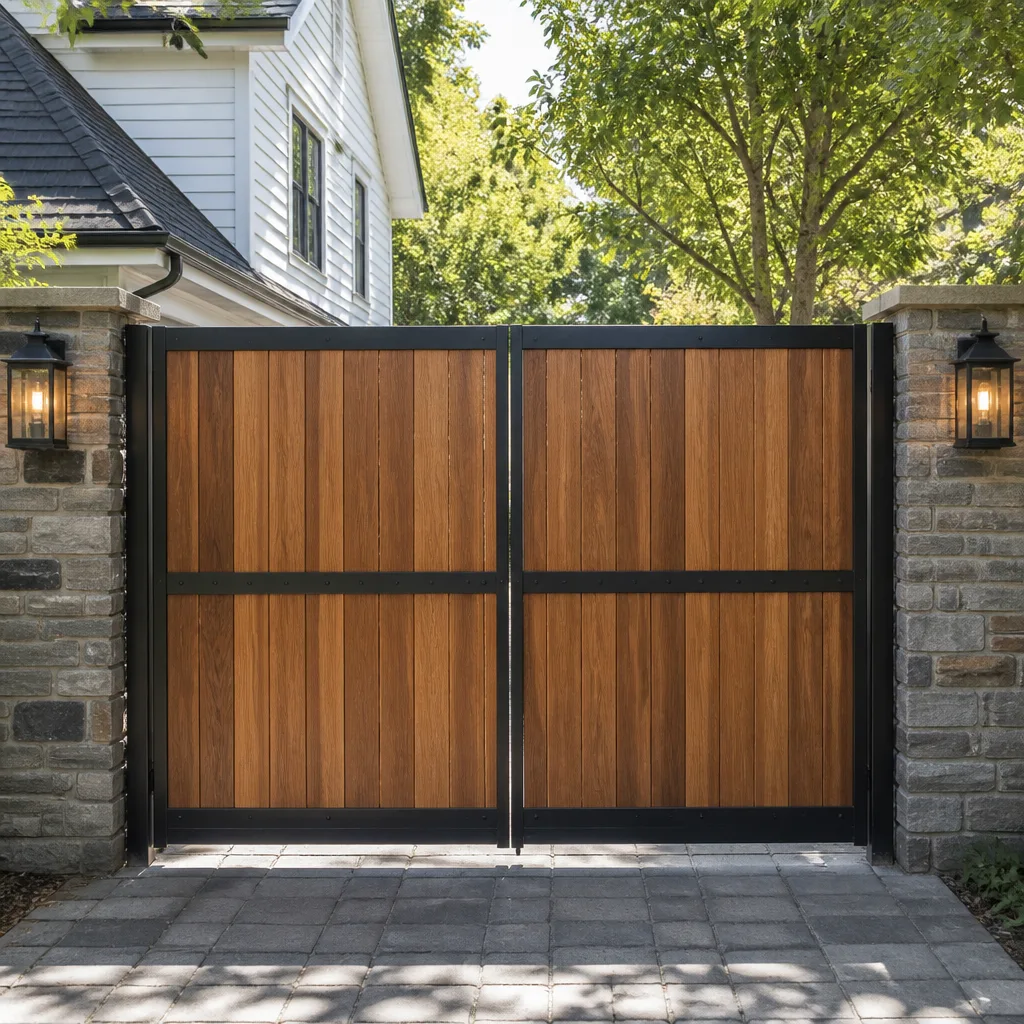
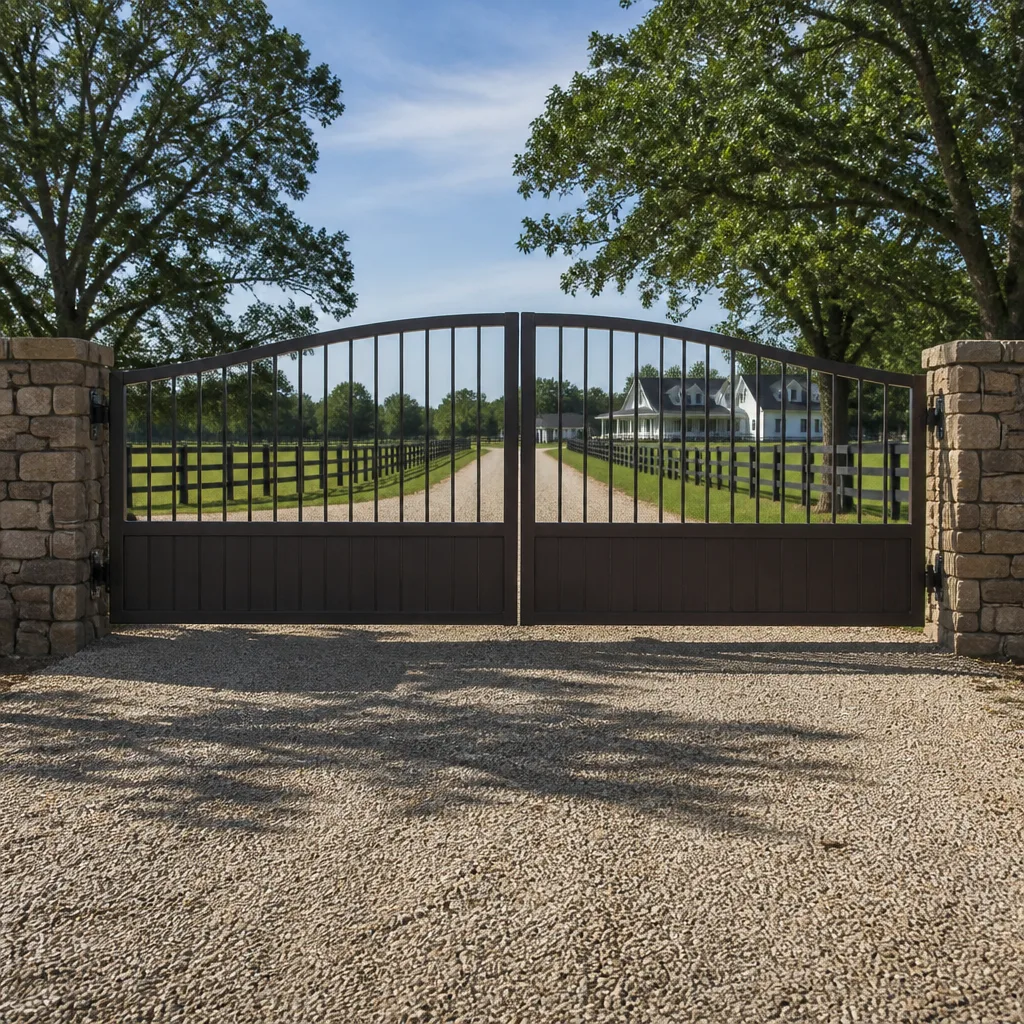
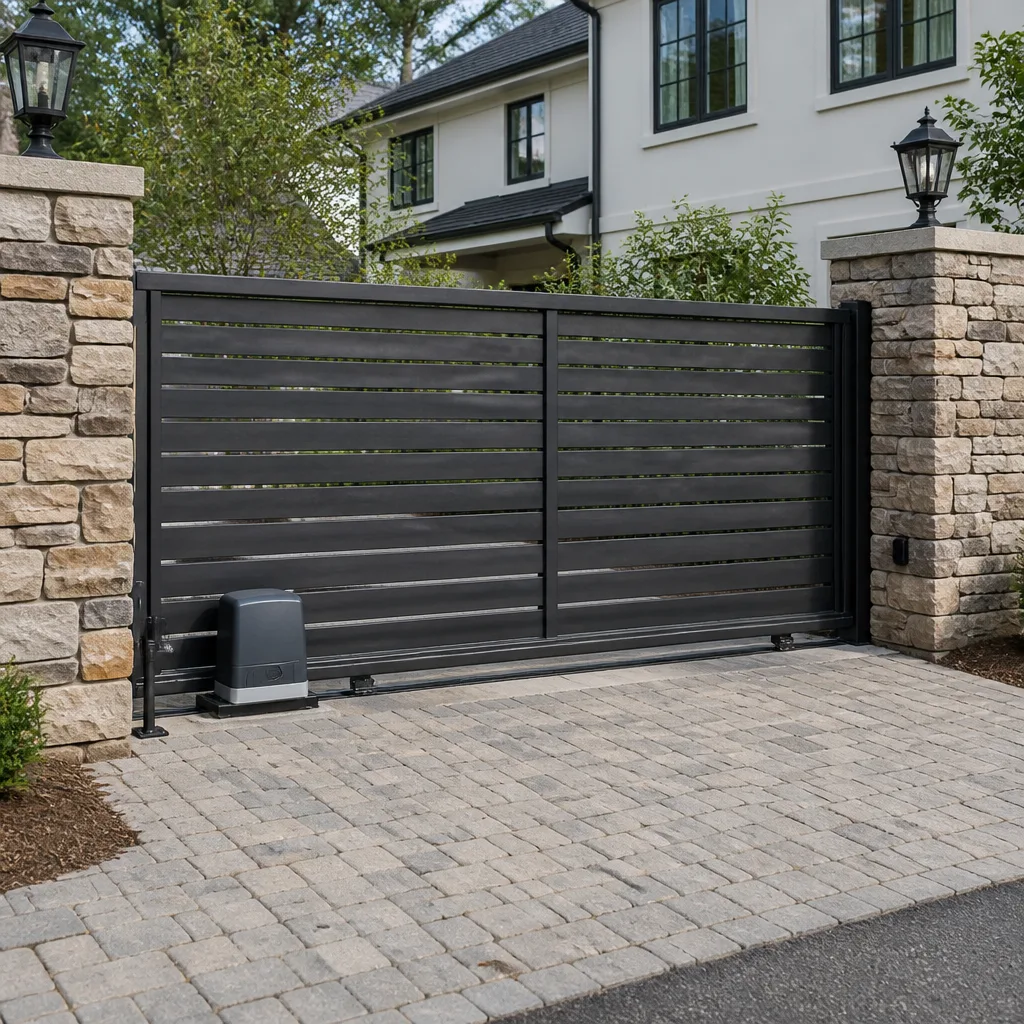
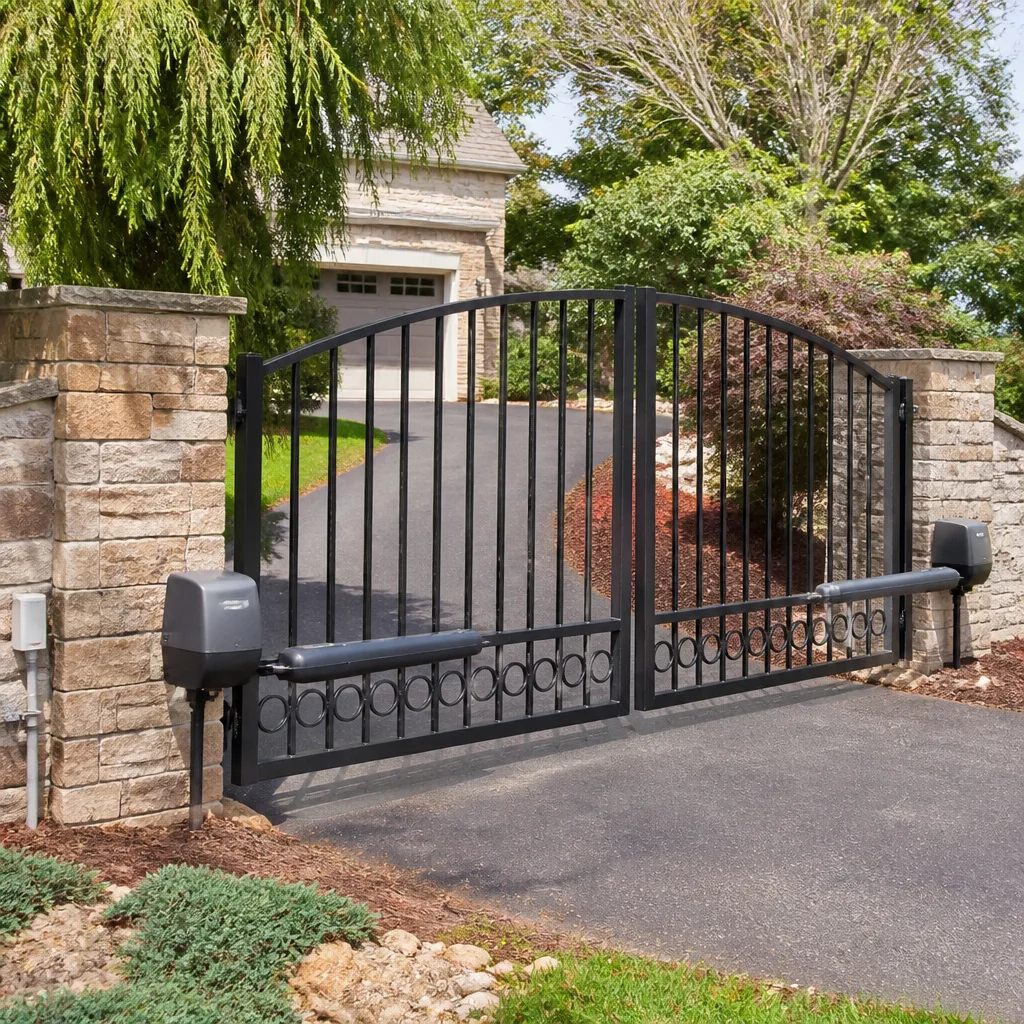
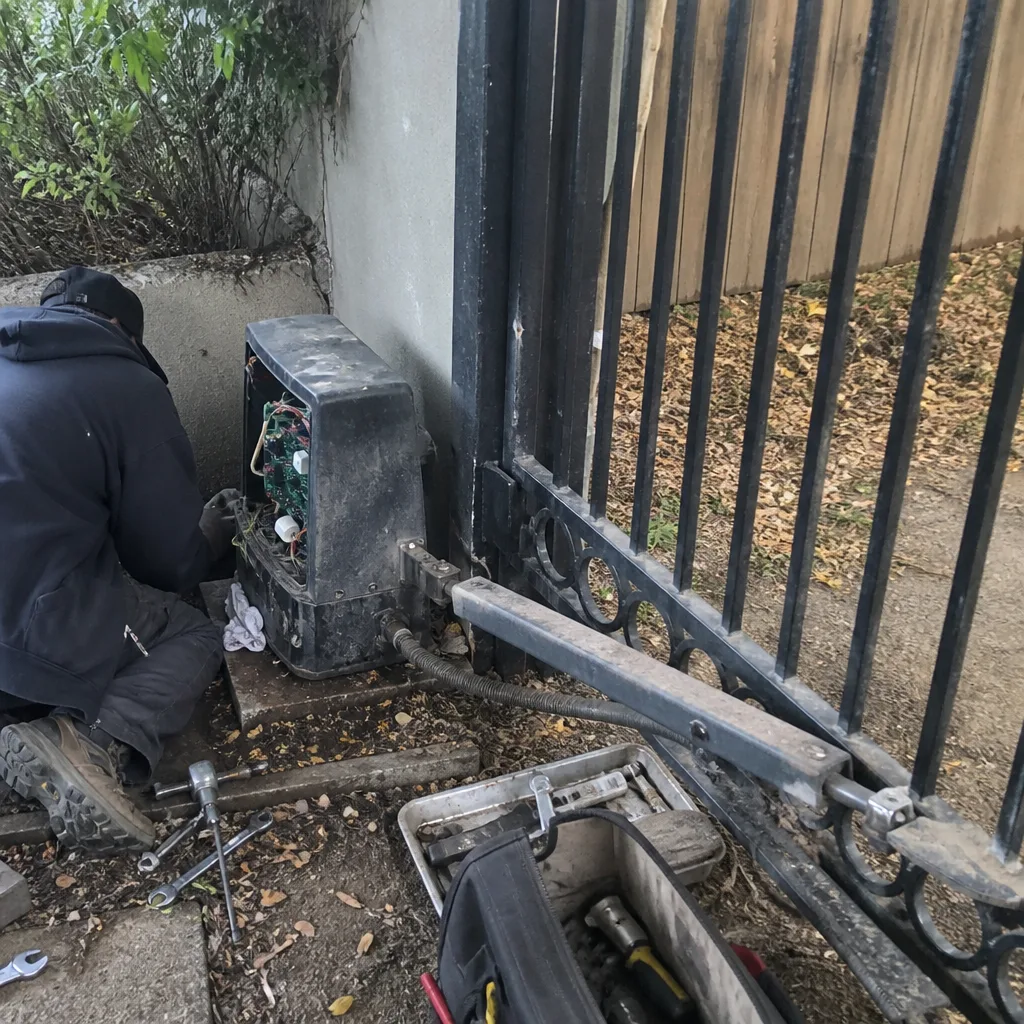 Before
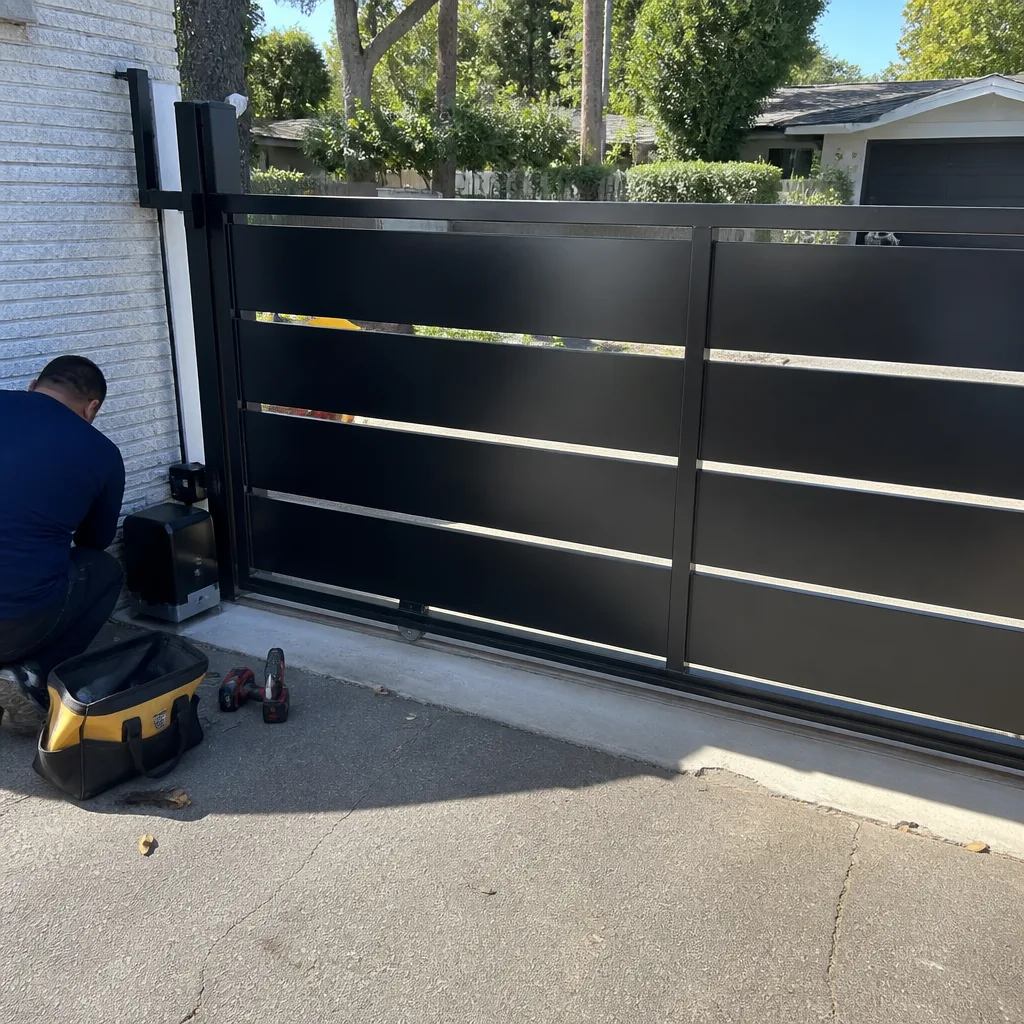 After
After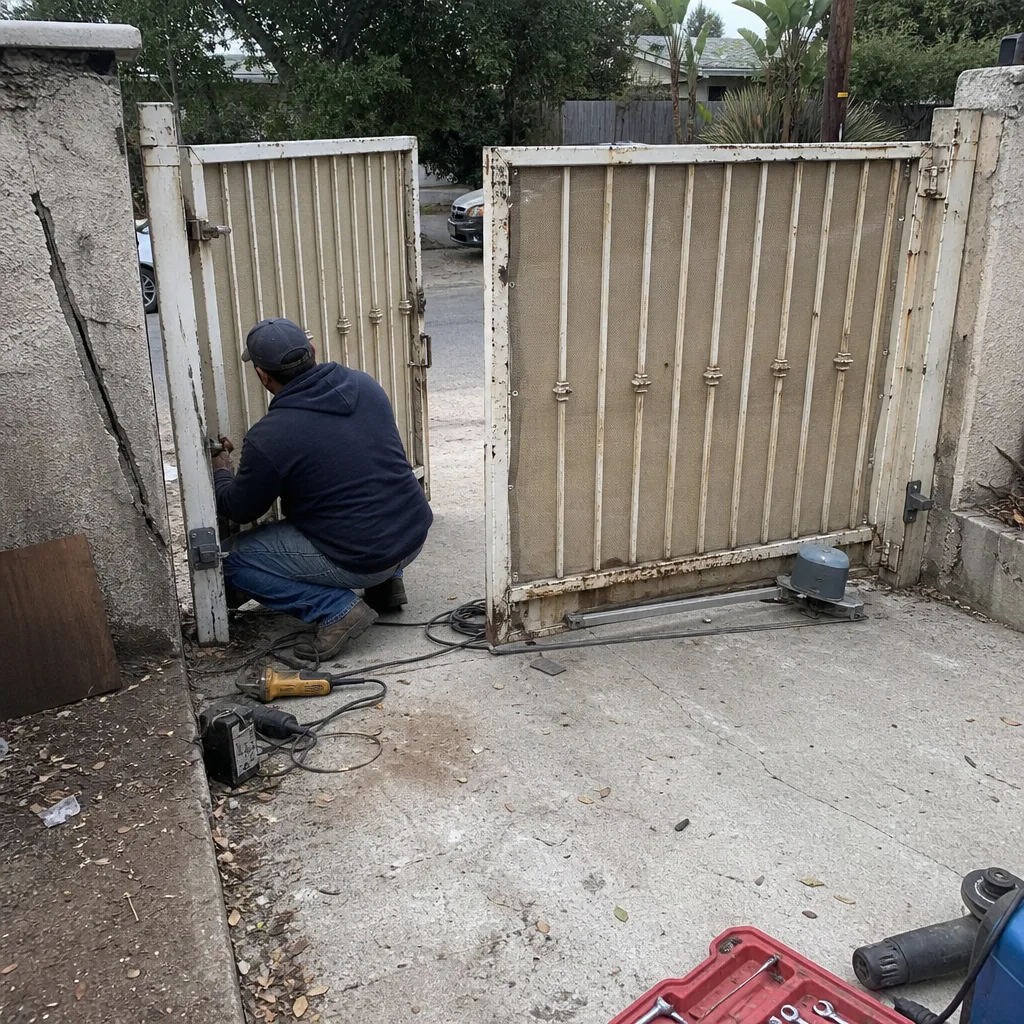 Before
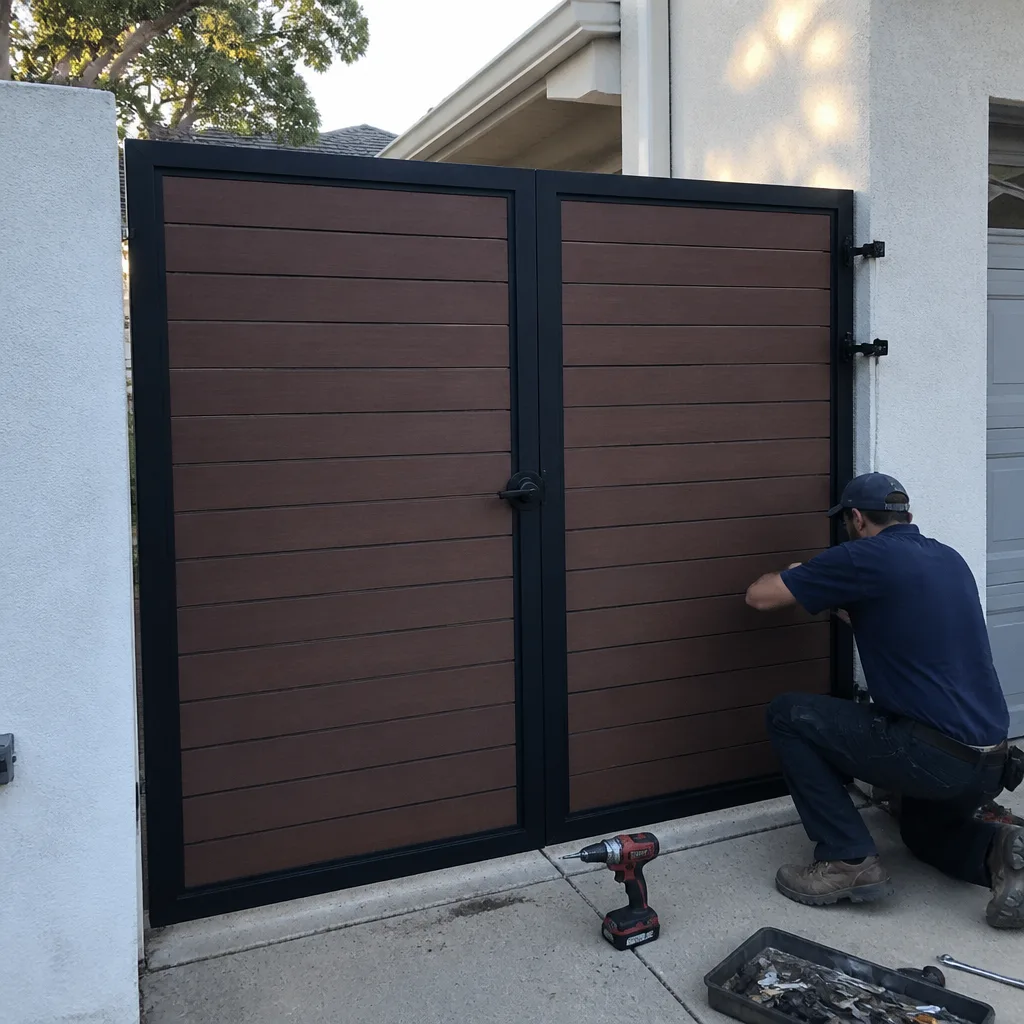 After
After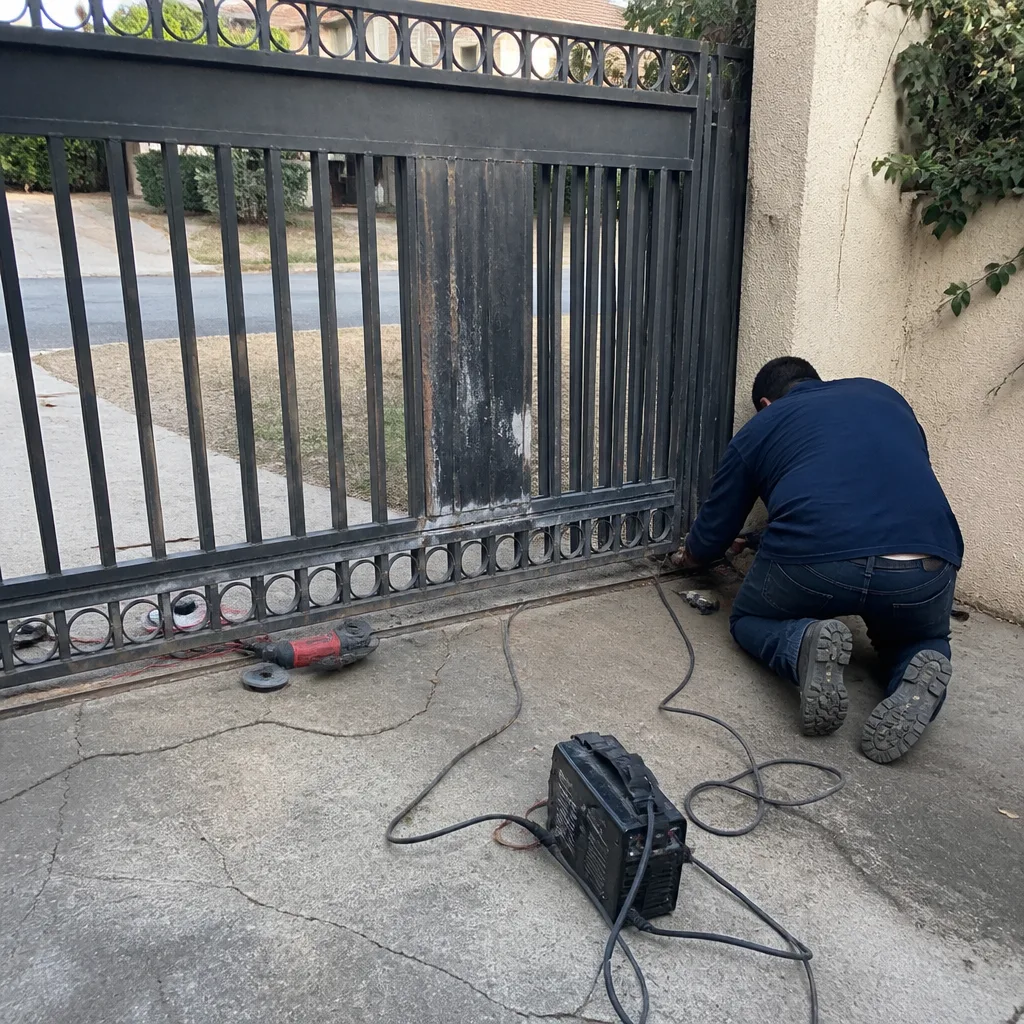 Before
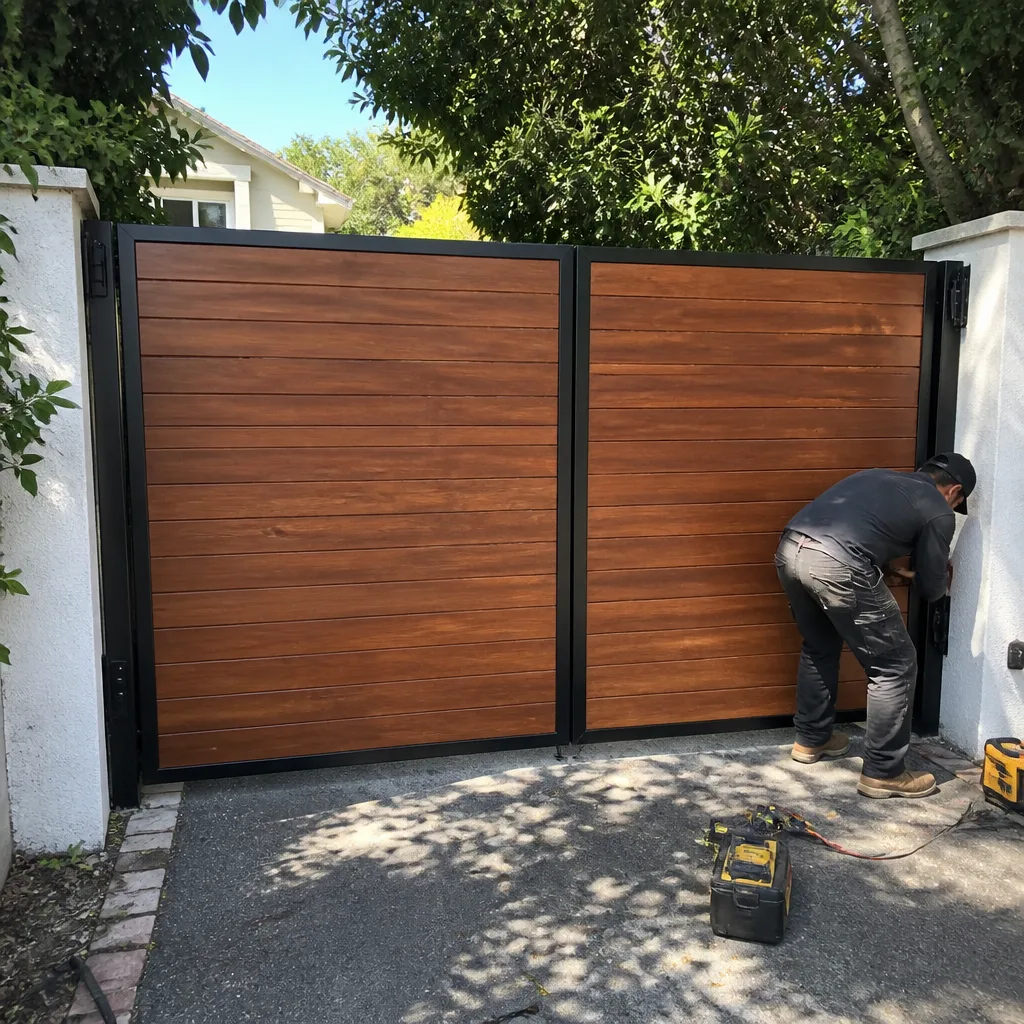 After
AfterGate Repair Maintenance Checklist for Sherman Oaks Homeowners
Most Sherman Oaks homeowners don’t think about their driveway gate until the morning it refuses to open. Then they’re late for work, the car is trapped in the driveway, and a repair bill lands at the worst possible moment. What’s frustrating is that roughly 70 percent of the gate failures we see in Sherman Oaks trace back to skipped maintenance that takes under an hour a year. This guide walks through exactly what to check, how often to check it, and which warning signs mean you should call someone before a small problem becomes a full replacement. We’ll cover hinges, motors, safety edges, power issues, and the seasonal quirks specific to the San Fernando Valley. By the end, you’ll have a maintenance rhythm that keeps your gate working through another Sherman Oaks summer.
Quick Answer
A smart Sherman Oaks gate maintenance routine comes down to a monthly visual check of the gate’s travel path, a quarterly lubrication of hinges and rollers, a semiannual test of the auto-reverse safety system, and an annual inspection of the motor, chain or belt tension, and electrical connections. Most homeowners can handle the first three. The annual inspection is where a second set of trained eyes pays for itself, because it catches the failures you can’t see from the driveway.
Table of Contents
- Why Driveway Gates Fail in Sherman Oaks
- Monthly Gate Checks You Can Do in 10 Minutes
- Quarterly Maintenance: Lubrication and Cleaning
- The Seasonal Tune-Up: What It Includes and Why It Matters
- Testing Safety Systems: Photo Eyes and Auto-Reverse
- Motor and Opener Care: What to Watch and What to Leave Alone
- Hinges, Wheels, and Track: The Hardware Inspection
- Common Mistakes to Avoid
- When to Call a Professional
- Frequently Asked Questions
- The Bottom Line
Why Driveway Gates Fail in Sherman Oaks
Sherman Oaks is hard on gates in ways that surprise people who moved here from milder climates. The summer heat bakes the metal and forces expansion that shifts hinges and loosens bolt holes. Santa Ana wind events push gates against their stops and strain motor mounts. The fine dust that blows through the Valley settles into chain drives and keypads and acts like sandpaper on moving parts. Add to that the irregular settling common in hillside neighborhoods like the streets south of Ventura Boulevard, and you get gates that gradually drift out of square, out of level, and out of adjustment.
In our experience, the gates that last decades in Sherman Oaks are not the ones that never have problems. They’re the ones whose owners catch problems early. A hinge that gets lubricated before it seizes costs nothing to maintain. A hinge that seizes and snaps costs a few hundred dollars and sometimes a day without a working gate. The maintenance checklist below is built around catching things early. Most of it takes less time than washing the car.
Here is the rhythm we recommend for a typical Sherman Oaks driveway gate:
- Monthly: Visual inspection of the gate path, rollers, and general movement. Test the auto-reverse once.
- Quarterly: Clean and lubricate hinges, rollers, and latch mechanisms. Check for loose hardware.
- Semi-annually: Test all safety systems thoroughly. Clean photo eyes. Check the chain or belt tension.
- Annually: A full tune-up covering the motor, electrical connections, limit switches, and structural alignment.
That annual item is the one many homeowners skip, and it’s the one that prevents the most expensive failures. A seasonal tune-up catches a failing capacitor or a drifting limit switch before either one strands your gate mid-cycle. More on that in a moment.
Monthly Gate Checks You Can Do in 10 Minutes
The monthly check is not a repair session. It’s a walkaround. You’re looking for anything that changed since last month, and you’re listening for sounds that weren’t there before. Here is exactly what we recommend checking once a month in Sherman Oaks.
- Watch the gate complete one full cycle. Open it, let it stop, close it, let it stop. Does it move at a consistent speed, or does it slow down partway through? Does it hesitate? Does it stop in the right place both directions? A gate that opens fine but closes slowly often has a motor capacitor starting to weaken.
- Listen during the cycle. A smooth gate is nearly silent except for the motor’s steady hum. Grinding means a bearing or roller is failing. A squeal that changes pitch means a belt is slipping. A rhythmic clicking near the motor can mean a gear is worn. Write down what you hear if it’s new. You’ll want to describe it accurately to a technician if it persists.
- Look at the gate’s path. Walk the full arc of a swing gate or the full length of a slide gate track. Is anything in the way: planter growth, landscape rocks nudged into the path, a child’s toy, a coiled hose? Sherman Oaks front yards often have bougainvillea or climbing fig planted near gate columns, and these grow fast in Valley heat. Trim anything that can brush the gate or block a photo eye.
- Check the gate’s resting position. A swing gate should sit square in the closed position, not sagging toward the ground or pulling away from the latch. A slide gate should sit parallel to the fence line, with the leading edge landing fully in the receiver. If it’s off by more than a finger’s width from last month, the gate is shifting.
- Test the manual release. Every automated gate has a manual release mechanism, usually a keyed lock or a pull handle on the motor. Operate it once a month to confirm you can still open the gate by hand if the power goes out. This is one of the most neglected safety features on Sherman Oaks gates, and the first time you need it during a July outage is not the time to discover it’s seized.
- Look at the ground around the gate posts. Is the concrete or soil cracking? Is there new rust staining at the base of the post? Post movement is slow and can be hard to see month to month, but the signs show up at ground level first.
None of these steps requires tools or mechanical skill. They require attention. Ten minutes once a month will tell you more about your gate’s health than any repair visit ever could, because you’ll have noticed the change before the failure.
Quarterly Maintenance: Lubrication and Cleaning
Every three months, your Sherman Oaks gate needs about half an hour of actual hands-on maintenance. The two tasks are lubrication and cleaning. Both are simple. Both are skipped by most homeowners, and both are the direct cause of most of the repair calls we run in this part of the Valley.
Lubrication. The goal is to reduce friction at every moving metal-on-metal contact point. You’ll need a can of lithium grease or a silicone-based spray lubricant. Avoid WD-40 for this job. WD-40 is a solvent and rust dissolver, not a lasting lubricant, and it actually strips away the lubricant that’s already on the part. Here is the quarterly lubrication list:
- Every hinge pin on a swing gate, top and bottom
- Roller wheels on a slide gate, both the wheel bearings and the axle
- The latch mechanism and strike plate
- The manual release mechanism at the motor
- Any pivot points on gate arms or operators
- Chain drives, using a proper chain lubricant
Apply a small amount, work the gate through one cycle, and wipe away any excess. Too much grease in Sherman Oaks just collects Valley dust and turns into grinding paste.
Cleaning. Dirt and dust are the enemies of every moving component on a gate. Here is what to clean quarterly:
- Photo eyes: These are the small sensors near the bottom of the gate opening, usually one on each side. Wipe the lenses with a soft, dry cloth. A dirty photo eye is the single most common cause of a gate that starts to close and then reverses for no apparent reason.
- The track on a slide gate: Remove leaves, gravel, and built-up dust from the track channel. A pebble in a V-track can cause a gate to bind or derail.
- Keypad surfaces: Valley dust works into the buttons and causes intermittent contact. A dry cloth or a very lightly dampened one is enough. Do not spray water or cleaner into a keypad.
- The gate’s top rail and panels: Built-up dust and leaf litter hold moisture against the metal and accelerate rust. A garden hose and a soft brush, followed by a dry wipe, is all it takes.
For homeowners who would rather not keep a grease gun in the garage, our $89 Seasonal Tune-Up covers all of the above plus the motor inspection and safety testing we describe below. It’s a standing offer, not a promotion with a catch, and it’s about the cheapest insurance you can buy for a gate in Sherman Oaks.
The Seasonal Tune-Up: What It Includes and Why It Matters
Twice a year, in spring and fall, your gate needs more than a wipe-down. It needs a tune-up. This is the service we perform most often in Sherman Oaks, and it’s the one that keeps a 20-year-old gate running like a two-year-old one. Here is what a proper seasonal tune-up covers, whether you do parts of it yourself or have us do all of it.
- Motor inspection. The motor housing is opened and checked for dust buildup, insect nests, and moisture. Terminals and connections are checked for tightness and corrosion. Loose electrical connections are a fire risk and a common cause of intermittent gate failures.
- Capacitor check. The start capacitor is a small cylinder inside the motor housing that gives the motor its initial surge of power. California heat shortens capacitor life, and a weak capacitor is why a gate might open fine in the morning but struggle in the afternoon. A tune-up catches this before it fails completely.
- Limit switch adjustment. The limit switches tell the motor where to stop in each direction. They drift over time, which is why a gate gradually starts overshooting or undershooting its stops. Adjusting them properly takes a few minutes and prevents the gate from slamming against its stops.
- Chain or belt tension check. A chain that’s too loose can jump a sprocket and bind the gate. Too tight, and it wears the motor bearings prematurely. The correct tension is a narrow range, and it varies by operator brand. We’re certified on nine major brands including BFT, Linear, and Ghost Controls, so the adjustment is the right one for whatever opener is on your driveway, not a best guess.
- Safety system calibration. The auto-reverse force setting is tested and adjusted if needed. This is the system that stops and reverses the gate if it meets resistance while closing. Too much force and the gate can injure a child or a pet. Too little and the gate reverses constantly for no reason.
- Structural check. Bolts, brackets, hinge welds, and post bases are inspected for looseness or fatigue. On hillside Sherman Oaks lots, we pay special attention to post plumb, because the same settling that cracks pool decks also shifts gate posts.
- Lubrication and cleaning. Everything from the quarterly list, done properly, with the right products for each component.
A seasonal tune-up typically takes under an hour when nothing is found that needs repair. When something is found, you hear about it before it becomes an emergency, with a written price before any work is done. That’s the difference between a $89 tune-up and a $900 emergency repair.
Testing Safety Systems: Photo Eyes and Auto-Reverse
A driveway gate is a motorized vehicle barrier. It weighs hundreds of pounds and it moves with more than enough force to injure a person or a pet. In fact, safety standards for automated gates exist specifically because of injuries and deaths caused by gates that lacked working safety systems. In Sherman Oaks, where many homes have children, grandchildren, and pets passing through the gate daily, this is the part of maintenance you cannot skip.
There are two primary safety systems on most automated gates, and both need testing at least twice a year.
The photo eyes. These are the small sensors mounted low on each side of the gate opening. They project an invisible beam between them, and if anything breaks that beam while the gate is closing, the gate stops and reverses. Here is how to test them:
- Open the gate fully.
- Press the close command.
- While the gate is closing, wave a box or a trash can lid between the photo eyes to break the beam.
- The gate should stop immediately and reverse direction.
If it doesn’t, the photo eyes are either dirty, misaligned, or failed. Clean the lenses first. If the problem persists, a technician can diagnose whether the issue is the eyes themselves or the control board receiving the signal.
The auto-reverse force system. This is a separate protection that uses current sensing in the motor. If the gate encounters resistance while closing, like a car bumper or a person, the motor detects the increased current draw and reverses. Testing it is simple:
- Open the gate, then initiate a close cycle.
- While the gate is moving, place a solid object like a trash can or a folded lawn chair in its path.
- The gate should stop when it contacts the object and reverse direction within two seconds.
If the gate pushes the object along without reversing, the force setting is too high. This is a calibration issue, not a part failure, and it’s quickly corrected by a technician with the right training. It’s also a genuine safety concern that should be addressed immediately, not added to a to-do list.
These safety tests take five minutes twice a year. If there are children or pets in the home, do them monthly. The peace of mind is real, and the testing process takes less time than brewing a pot of coffee.
Motor and Opener Care: What to Watch and What to Leave Alone
The motor is the heart of your automated gate, and it’s also the component most likely to be damaged by well-meaning but untrained hands. Here is what a Sherman Oaks homeowner should know about caring for a gate motor, and where to draw the line between maintenance and repair.
What to watch:
- Unusual sounds. A healthy gate motor produces a consistent hum. Grinding, clicking, buzzing, and especially any sound that comes and goes are all worth noting. A transformer that’s on its way out often buzzes. A gear train with a stripped tooth makes a rhythmic click on every rotation.
- Rust or corrosion on the housing. The motor housing protects the electrical components from Valley dust and winter rain. If the housing is rusted through in a spot, moisture has a path inside.
- Heat. After a normal cycle, the motor housing should be warm, not hot. A motor that’s too hot to hold a hand against after one cycle is drawing too much current, usually from a binding gate or a failing capacitor.
- Loose or exposed wiring. Rodents chew gate wiring in Sherman Oaks, and UV exposure degrades the insulation on wires that run outside conduit. Any exposed copper is a short waiting to happen.
What to leave alone:
- Capacitors. Even with the power off, a start capacitor stores a charge that can deliver a serious shock. This is not a DIY component.
- Control board diagnosis. When a gate behaves erratically, the control board is often blamed. It’s often innocent. Replacing boards on a hunch is expensive, and a technician with training on your specific opener brand can diagnose the actual cause. We service Viking, Linear, BFT, and Ghost Controls openers weekly in Sherman Oaks, and in most cases the fix is a sensor, a wire, or a limit switch, not a board.
- Motor disassembly. Opening a motor housing to “take a look” usually voids the manufacturer protection and often creates the problem the homeowner set out to solve.
The right line is this: you watch and listen. A trained technician opens and repairs. The watch-and-listen role is genuinely useful, because no technician is at your gate 24 hours a day and you are. The notes you keep from your monthly checks are exactly the information that helps a technician fix the problem on the first visit.
Hinges, Wheels, and Track: The Hardware Inspection
The moving parts of a gate are simple mechanical systems, and simple mechanical systems fail in predictable ways. Here is what to inspect and what each symptom means.
For swing gates:
- Hinge sag. Stand back and look at the gate from the latch side. The top of the gate should be level and the gap between the gate and the latch post should be even top to bottom. A gate that sags toward the latch side has a worn hinge or a shifting post. If the sag is in the hinge, the fix is often a hardware replacement. If it’s the post, the fix is structural and should not wait, because a leaning post gets more expensive to correct every month it’s left alone.
- Hinge pin movement. Open the gate halfway and lift up on the end. Any vertical play in the hinge pins means the bushings or pins are worn. This play causes the gate to bounce during operation, which stresses the motor.
- Latch alignment. The latch should engage smoothly without needing the gate to be lifted or pushed laterally. A latch that needs persuading means something has moved, and the “persuasion” will eventually break something.
For slide gates:
- Wheel condition. Slide gate wheels are steel or nylon and they do wear out. A wheel with a flat spot makes a thump-thump sound as the gate moves. A wheel with a failed bearing causes the gate to wobble or bind.
- Track cleanliness and alignment. The track should be straight, clean, and properly anchored. In Sherman Oaks, tree roots from mature oaks and ficus trees are a common cause of track heaving. A track that’s lifted even half an inch can cause the gate to jump the track.
- Guide rollers. The guide rollers hold the top of the gate against the fence line. If they’re loose or worn, the gate leans, and a leaning slide gate destroys its own wheels in a few months.
For both gate types:
- Welds. Walk the entire perimeter of the gate and look at every weld joint. A crack in a weld often starts as a hairline that’s easy to miss but easy to repair. Left alone, it propagates and the repair becomes a fabrication job instead of a touch-up.
- Fasteners. Every bolt and screw on the gate should be tight. In Sherman Oaks, the combination of thermal cycling and the vibration from constant gate movement works fasteners loose over time. A quarterly check with a wrench catches most of them.
The hardware inspection is the cheapest prevention there is. Most hardware fixes cost a fraction of motor repairs, and almost all of them are avoidable with a ten-minute look every quarter.
Common Mistakes to Avoid
- Lubricating with WD-40. Every few weeks we see a Sherman Oaks gate that’s been treated to a generous WD-40 bath. WD-40 is not a lubricant for gate hardware. It displaces water and dissolves rust, which is useful in some contexts, but it washes away the grease that keeps hinges and rollers quiet. Use lithium grease or silicone spray instead.
- Ignoring a dirty photo eye. The most common gate service call in Sherman Oaks is “my gate reverses for no reason.” The most common cause is a photo eye with Valley dust on the lens. Wipe the lenses before calling anyone. It’s a two-minute fix that saves a service fee.
- Forcing a gate that’s binding. When a gate starts to bind, the motor works harder, draws more current, and runs hotter. Every month of forcing it shortens the motor’s life. If the gate is binding, find out why before running more cycles.
- Adjusting limit switches without knowing the system. Limit switches are finicky. A small adjustment in the wrong direction makes the gate overshoot its stop and slam the hardware. If you’re not trained on your specific opener, leave this adjustment to someone who is.
- Skipping the manual release test. Most Sherman Oaks homeowners have never operated their gate’s manual release, and the first time they need it is during a power outage when the gate is closed and the car is inside. Test it monthly so it works when it matters.
- Waiting for total failure before calling. Gates almost never fail without warning. The warning was there: the new sound, the slower cycle, the gate that reversed once and then worked fine. The earlier you call, the cheaper the repair. That’s not a sales pitch. It’s how mechanical systems work.
- Planting fast-growing vines on gate columns. Bougainvillea and ivy on gate columns look beautiful, but their roots and tendrils find their way into hinges, keypads, and photo eye housings. Keep plants trimmed at least 18 inches from all gate hardware.
When to Call a Professional
Some gate problems are homeowner-solvable, and many are not. Here are the situations where calling a professional is the right call. If the gate makes a grinding noise that’s getting louder, a bearing or gear is failing and the part needs replacement. If the gate moves at different speeds in different directions, there’s an electrical or capacitor issue that needs diagnosis with a multimeter. If the gate reverses for no reason and the photo eyes are clean, the problem is in the control system. If a post is leaning, the problem is structural and it will not correct itself. If the gate trips a breaker, stop using it until the circuit has been inspected. If the gate has been hit by a car, even slowly, the alignment is compromised and the hardware needs a full check. Ironworks Gate Co. offers free estimates in Sherman Oaks, and we’ll tell you honestly whether a repair is needed or whether the gate just needs a tune-up. Call (925) 590-4289 and a live person will answer.
Frequently Asked Questions
Twice a year for a full tune-up, plus monthly visual checks, is the right rhythm for most Sherman Oaks gates. The Valley’s heat, dust, and Santa Ana winds put extra stress on gates compared to coastal neighborhoods, so the semiannual tune-up catches problems that a yearly check would miss. We offer an $89 Seasonal Tune-Up specifically for this, and it covers everything described in the tune-up section above.
The most common cause is a dirty or misaligned photo eye. Wipe the lenses with a dry cloth and make sure both eyes point at each other. If the reversal continues after cleaning, the force setting may be too sensitive or a sensor may be failing. Call us at (925) 590-4289 and describe the problem; most of these calls are resolved in a single visit.
Our seasonal tune-up is $89, flat, and includes the full inspection, cleaning, lubrication, safety testing, and adjustment list described above. If we find something that needs a real repair, you get a written price before any work is done, and you’re never obligated to proceed. There’s also a standing $50 Off Any Repair Over $250 offer for Sherman Oaks homeowners.
Yes. Every automated gate has a manual release that disconnects the motor from the gate, letting you operate it by hand until repairs are made. Test the release monthly so you know how to use it when you need it. If the manual release is stiff or stuck, that’s something a tune-up visit will address.
Heat shortens motor life, so a Sherman Oaks gate motor typically lasts 8 to 12 years with proper maintenance, versus 10 to 15 in cooler climates. The components that usually fail first are the capacitor and the limit switches, both of which are replaceable. A well-maintained BFT, Linear, or Ghost Controls opener can reach the upper end of that range.
Yes. We service nine automation brands including BFT, Linear, Viking, and Ghost Controls, and we’re trained on each one’s specific control board, limit switch, and safety system configurations. Whatever opener is on your driveway, the right fix gets made on the first visit. Call (925) 590-4289 and tell us what’s on your gate.
The Bottom Line
A driveway gate is a mechanical system, and mechanical systems reward attention. The maintenance rhythm in this guide takes under two hours per year in total, and it prevents the majority of the failures that strand Sherman Oaks homeowners with a gate stuck open or stuck closed. Monthly checks catch changes early. Quarterly lubrication and cleaning keep parts from wearing prematurely. Semiannual safety tests keep your family and pets safe. Annual tune-ups catch what the eye can’t see. If you do nothing else, do the safety tests and the lubrication. And if you’d rather hand the whole checklist to someone who does it every day, we’ll be happy to take it from here. From the Ironworks Gate Co. home page you can see the full scope of what we do, and we answer the phone 24 hours a day. Call (925) 590-4289 for a free estimate, a free second opinion on any written quote, or just a straight answer about whether your gate needs attention. The tea’s on, and a live person picks up.
Written by Victor Salinas, Owner at Ironworks Gate Co., serving Sherman Oaks since 2013.