
Last updated August 25, 2026
Free on-site gate assessment - hinges, posts, and your LiftMaster or Nice gate operator checked before anything is quoted
The assessment is free and the quote is the invoice.
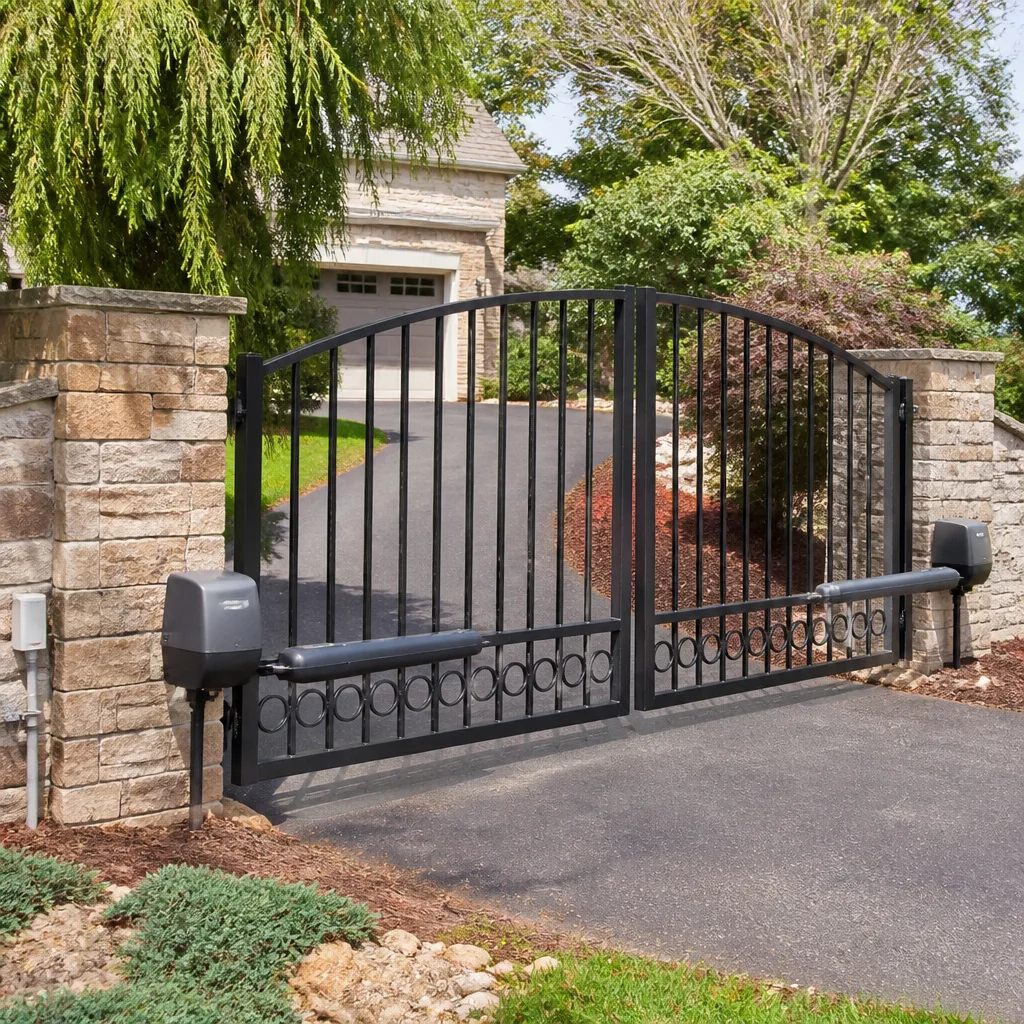
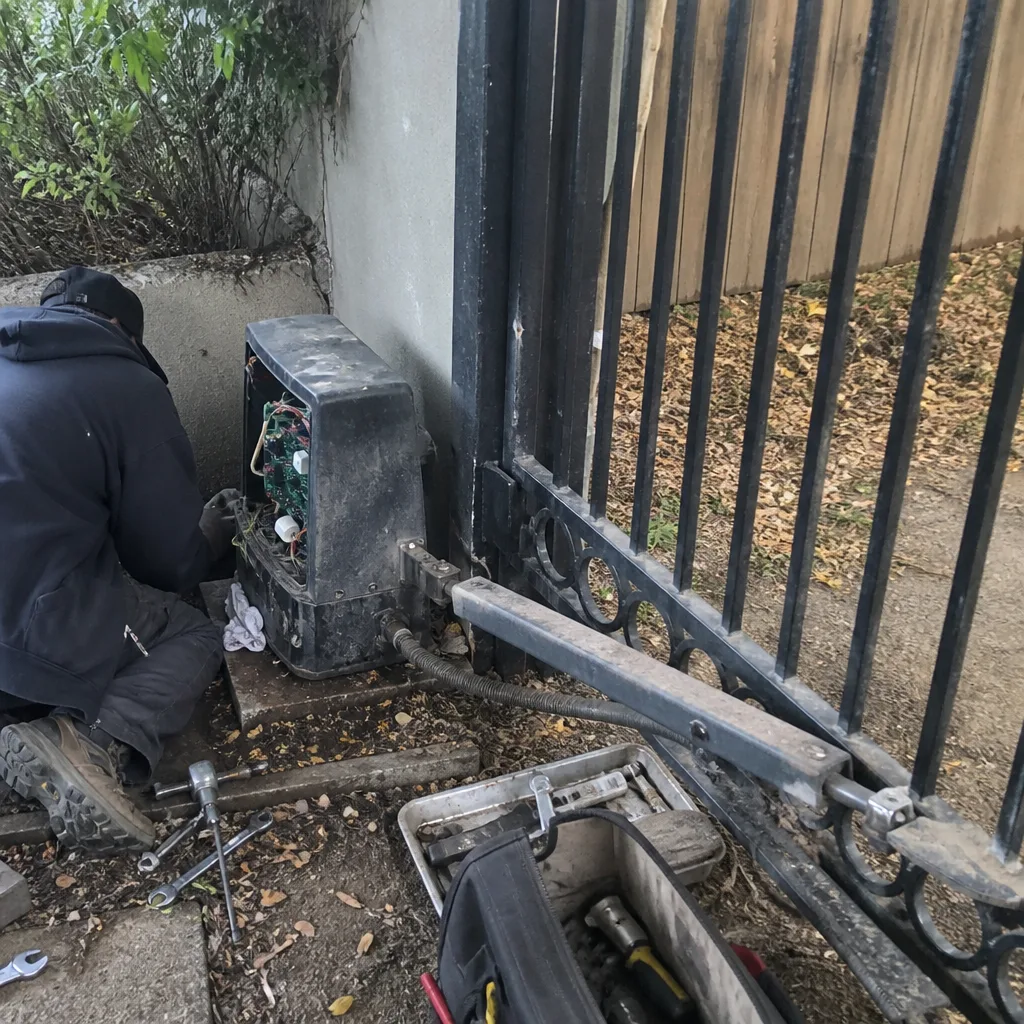 Before
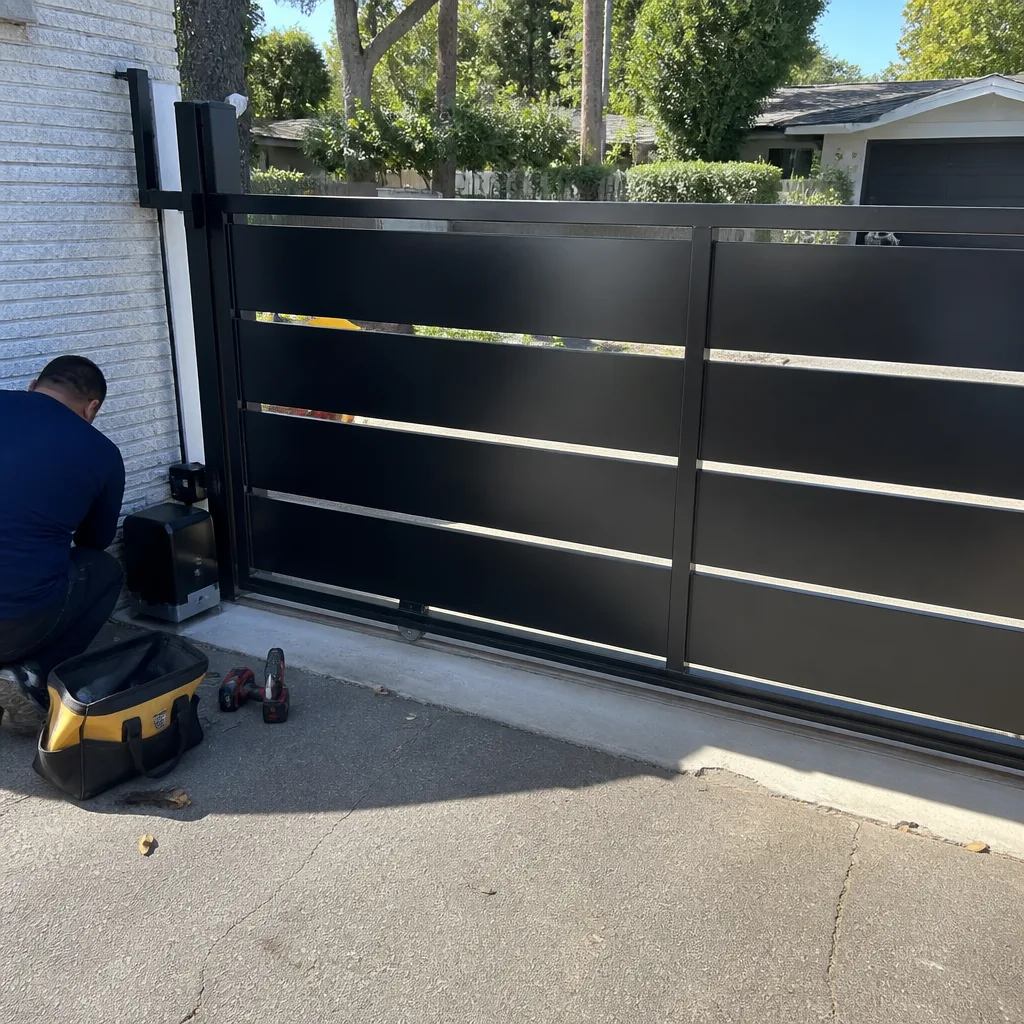 After
After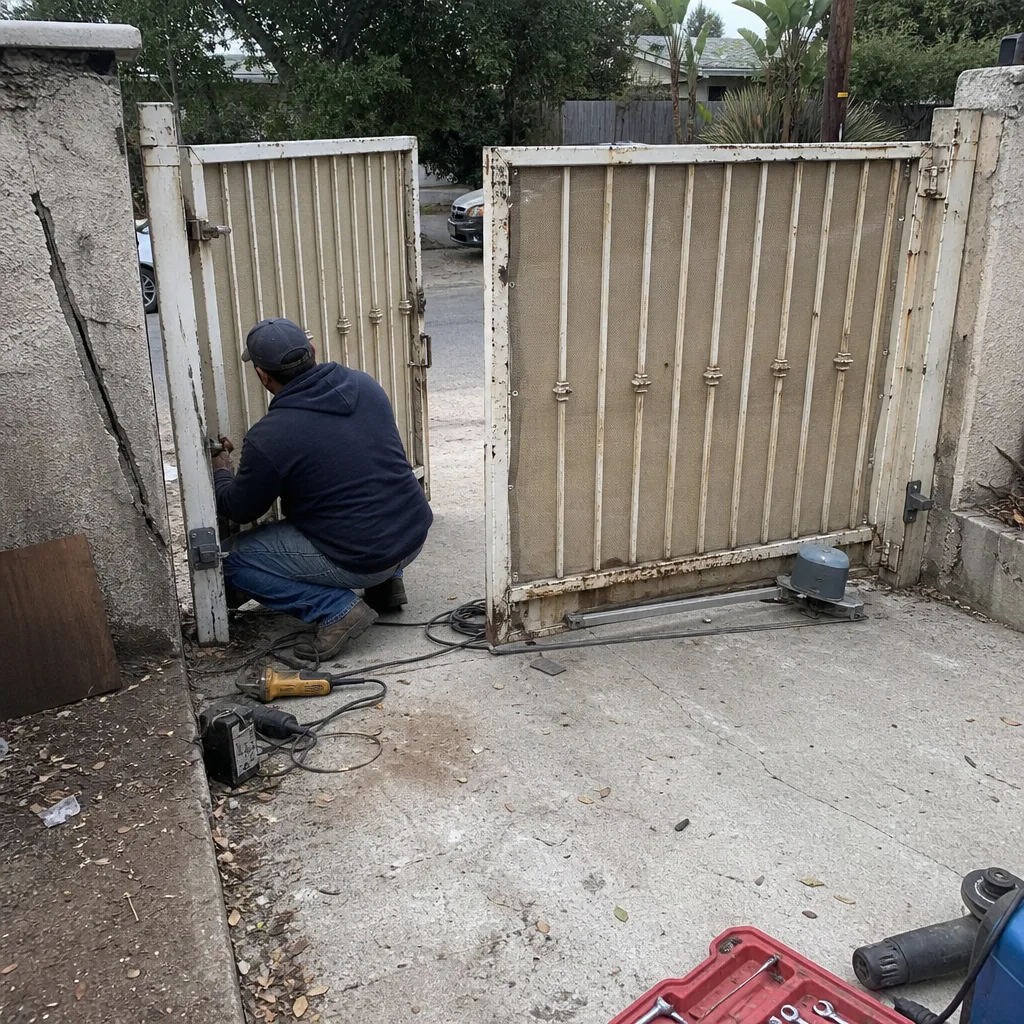 Before
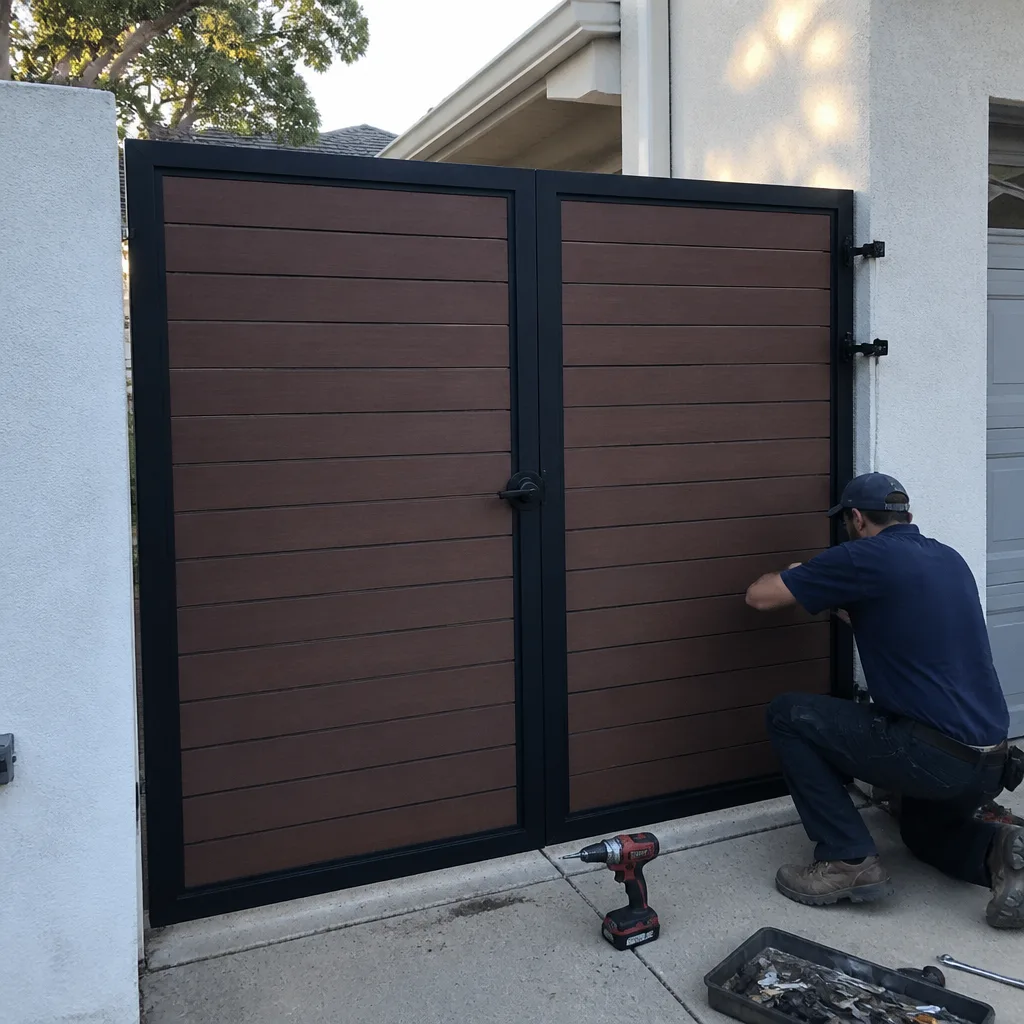 After
After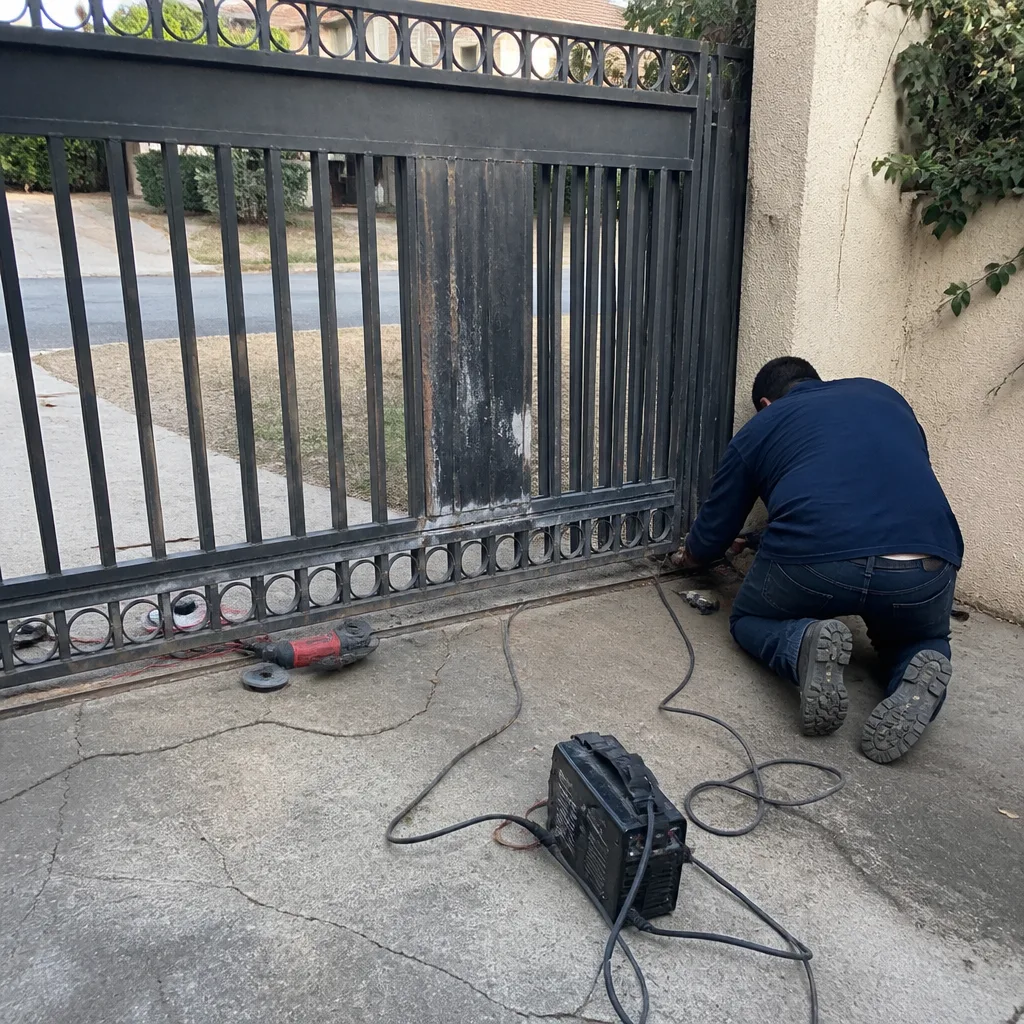 Before
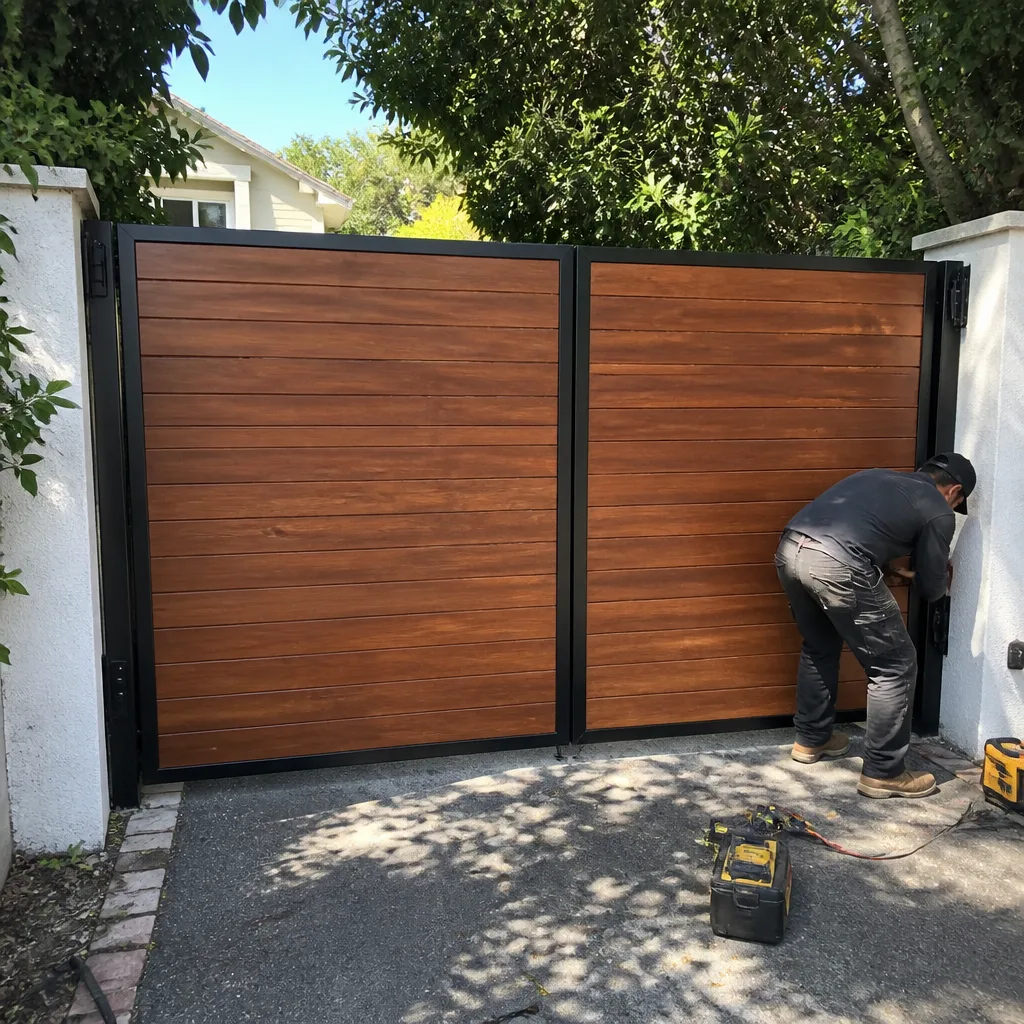 After
AfterDIY vs Professional Gate Repair: The Sherman Oaks Homeowner’s Decision Guide
Here’s something most Sherman Oaks homeowners don’t realize until it’s too late: roughly half the gate repair calls we take at Ironworks Gate Co. home are jobs that started as a weekend DIY project. A homeowner watched a video, bought a part online, spent a Saturday afternoon on the driveway, and now the gate is in worse shape than when they started. This guide exists to help you avoid that exact scenario. You’ll learn which gate repairs are genuinely safe to handle yourself, which ones will cost you more money if you attempt them, and how to tell the difference before you pick up a wrench in Sherman Oaks.
Quick Answer
Most Sherman Oaks homeowners should handle only basic maintenance themselves: cleaning tracks, tightening visible bolts, lubricating hinges, and testing safety sensors. Anything involving torsion springs, gate motors, electrical wiring, or structural welding should go to a licensed professional. The cost of a botched DIY repair typically runs two to three times the price of calling a gate specialist in the first place.
Table of Contents
- What You Can Safely Fix Yourself
- Repairs That Should Always Go to a Pro
- The Real Cost of a DIY Gate Repair Gone Wrong
- What a Professional Gate Repair Actually Includes
- Sherman Oaks-Specific Considerations
- How to Spot a Gate Repair Pro Worth Hiring
- Step-by-Step: The DIY Gate Safety Check
- Common Mistakes to Avoid
- When to Call a Professional
- Frequently Asked Questions
- The Bottom Line
What You Can Safely Fix Yourself
Let’s start with good news: some gate maintenance is entirely reasonable for a Sherman Oaks homeowner to handle. These tasks don’t require special tools, don’t involve dangerous components, and won’t void any warranty on your gate opener. In our experience serving homes from the Chandler Estates to the hills above Ventura Boulevard, the most common DIY-friendly fixes fall into a short list.
Cleaning and Lubrication
A gate that’s dragging, squealing, or hanging slightly crooked is often just dirty or dry. Sherman Oaks gets its share of dust and fine grit, especially during Santa Ana wind season. That grit works its way into rollers, hinges, and track channels. A thorough cleaning with a stiff brush and a shop vac, followed by a silicone-based lubricant on moving metal parts, solves many minor performance issues. Do this twice a year and you’ll extend the life of your gate hardware meaningfully.
Tightening Visible Hardware
Gate hinges, bracket bolts, and track fasteners loosen over time from daily opening and closing cycles. Walk your gate line with a socket set every few months. If you can see a bolt and reach it safely with both feet on the ground, it’s fair game. A quarter-turn snug on loose hardware often eliminates rattling and sagging.
Testing Safety Sensors and Photo Eyes
Every automated gate in Sherman Oaks is required to have working safety sensors that reverse the gate when something crosses the path. You can test these yourself: place a cardboard box in the gate’s path and close it. If the gate reverses on contact or before contact, the sensors are doing their job. If the gate crushes the box, stop using the gate immediately and call for service. This is a test, not a repair, but it’s one every homeowner should know how to perform.
Battery Replacement in Keypads and Remotes
If your gate opens fine from the main control but your keypad or remote has stopped working, the fix is usually a $3 battery. Open the unit, note the battery type, and swap it. This is the single most common “repair” call we receive where the fix costs less than a cup of coffee.
Repairs That Should Always Go to a Pro
Some components on a driveway gate carry enough stored energy to cause serious injury, and others require specialized diagnostic equipment to repair correctly. These are the ones we tell every Sherman Oaks homeowner to leave alone.
Torsion Springs and Extension Springs
The spring system on a cantilever or sliding gate is under tremendous tension. When a spring snaps, it releases that energy all at once. A spring that lets go while you’re working on it can break bones, remove fingers, or worse. This is not hyperbole. Professional gate technicians use specific winding tools and follow a controlled procedure to release, replace, and re-tension springs safely. If your gate spring is broken, sagging, or showing gaps between coils, step away and call for service.
Gate Motors and Opener Repair
Modern gate openers from brands like BFT, Linear, and Viking are built around control boards that manage voltage, amperage, obstacle detection, and limit settings. When a motor hums but won’t move, or cycles erratically, the problem is usually electrical, not mechanical. Diagnosing it requires a multimeter and familiarity with the specific control board. Replacing a capacitor on the wrong assumption can fry a board that would have been repairable. In Sherman Oaks, where many homes run openers installed ten or fifteen years ago, we regularly see DIY electrical repairs that turned a $200 fix into a $900 board replacement.
Welding and Structural Repairs
A cracked weld on a gate frame or a sagging picket isn’t a bolt-on fix. Welding iron and steel properly requires a welder, the right rod or wire, and enough experience to know penetration depth and heat control. A bad weld looks fine on the surface and fails catastrophically later. This is especially true for ornamental iron gates common in older Sherman Oaks neighborhoods near the Sepulveda corridor, where the original welds are now forty or fifty years old.
Sensor and Loop Detector Replacement
If your gate opens but won’t close, or closes without stopping for an obstruction, you likely have a failed sensor or loop detector. These components are wired into the control board and require specific calibration. Ghost Controls and other DIY-friendly brands have made this slightly more accessible, but a mis-calibrated sensor is a safety hazard, not a cosmetic issue.
The Real Cost of a DIY Gate Repair Gone Wrong
Let’s put real numbers on what DIY gate repair costs when it goes sideways, because talking about “risk” in the abstract doesn’t change anyone’s behavior. Here’s what we’ve actually seen on service calls in Sherman Oaks:
- Wrong part ordered online: $40 to $120 wasted, plus the delay. Many gate parts look identical but are sized differently. A roller for a 2-inch track won’t fit a 2.5-inch track, and most online sellers don’t offer returns on installed parts.
- Stripped bolt or broken bracket from over-tightening: $60 to $150 in parts and labor. Easy to do with an impact driver, surprisingly common.
- Fried control board from diagnosing with power on: $250 to $800, depending on brand. This is the big one. A single crossed wire while the unit is live can take out the entire board. BFT and FAAC boards cluster at the higher end of that range.
- Damaged gate panel from forcing a stuck gate: $400 to $1,200. When a gate is stuck, forcing it often bends the frame or tears the panel. Straightening a bent gate costs more than most mechanical repairs.
- Injury to the homeowner: The cost nobody budgets for. Hospital visits, missed work, and a gate still broken at the end of it all.
The pattern is consistent: the repair that would have been $180 to $340 from a professional becomes a $600 to $1,500 repair after a failed DIY attempt. We’re not saying this to scare anyone. We’re saying it because we’ve written these estimates many times, and the conversation in the driveway is never fun.
What a Professional Gate Repair Actually Includes
When you hire a gate specialist in Sherman Oaks, you’re not just paying for the part and the labor. You’re paying for the diagnosis. And diagnosis is where the real value lives. A humming motor could be a capacitor, a bad limit switch, a seized gearbox, or a failing transformer. Four different causes, four different repairs, one symptom. A trained technician finds the right one on the first visit because they’ve seen all four hundreds of times.
Here’s what a professional repair visit typically includes:
- Visual and mechanical inspection: The technician walks the entire gate system: hinges, rollers, track, chain or belt, motor, control board, sensors, and keypad. Problems in one area often cause wear in another, and a good technician catches both.
- Electrical diagnostics: Voltage checks at the motor, continuity tests on wiring, and control board diagnostic readouts. This is where a BFT system gets different treatment than a Linear system, because the boards have different test points and error codes.
- Clear explanation and written price: The technician tells you what’s wrong, what it will cost, and what your options are. The price is settled before any work starts. No surprises on the bill.
- The repair itself: Most gate repairs are completed the same visit. The truck carries common parts for all nine major opener brands we service, which means fewer “we’ll come back” moments.
- Testing and adjustment: The gate is cycled repeatedly, limit settings are confirmed, safety sensors are tested with an obstruction, and the gate’s closing force is measured.
- Written warranty: Every job is backed in writing. If it’s not right, the company comes back and makes it right.
Sherman Oaks-Specific Considerations
Sherman Oaks has particular conditions that affect gate repair decisions. Understanding these local factors helps homeowners make smarter choices about maintenance and repair timing.
The Climate Factor
Sherman Oaks sits in a hot-summer Mediterranean climate. That means dry heat for months on end, then a cooler wet season from roughly November through March. Metal expands and contracts through these cycles. Gate hinges that were perfectly aligned in June may bind slightly in December as the steel contracts. Wood-framed gates swell during the wet season and shrink in summer. This seasonal movement is normal, but it means a gate that’s marginally adjusted will fail at the worst time, usually during a winter rainstorm.
The Dust and Wind Factor
Santa Ana winds push fine dust and debris into every mechanical system in the San Fernando Valley. Gate tracks, roller bearings, and chain drives collect this grit over time. A gate that runs quietly in Studio City might grind within a mile of the Sepulveda Basin, where open terrain sends more dust airborne. Regular cleaning matters more in Sherman Oaks than in coastal neighborhoods like Santa Monica.
Setback and Slope Considerations
Many Sherman Oaks homes sit on sloped lots, especially in the hills south of Ventura Boulevard. A gate on a slope puts uneven load on hinges and requires more torque from the opener motor. This accelerates wear on springs and gearboxes. If your driveway slopes, expect shorter intervals between spring replacements and motor service. This is a Sherman Oaks reality that flat-lot homeowners in Encino or Tarzana don’t face to the same degree.
Older Housing Stock
A significant portion of Sherman Oaks residential development happened between the 1940s and 1970s. That means a lot of original gate hardware is now forty, fifty, sometimes sixty years old. Ornamental iron gates from this era are beautifully built but often have worn hinges, fatigued welds, and outdated latch hardware. Replacement parts for these older gates are rarely stocked at big box stores, which pushes many homeowners toward a specialist who can weld, fabricate, and adapt.
How to Spot a Gate Repair Pro Worth Hiring
Not all gate repair companies are equal. In Sherman Oaks and the surrounding Valley, you’ll find everyone from solo handymen with a truck to established specialists. Here’s how to tell the difference before you let someone touch your gate.
Ask About Brand Coverage
A gate company that only works on one brand of opener will push you toward replacing your motor even when a repair would work. A company that services BFT, Linear, Viking, Ghost Controls, and others can diagnose your existing system fairly. When you call, ask directly: “Which opener brands do you service?” If the answer is vague or limited, keep looking.
Ask About the Warranty
The single most revealing question: “What happens if I’m not happy with the repair?” A confident company answers without hesitation: a written guarantee, a specific time window, and a process that doesn’t require you to argue. If the answer is handled loosely, you’re betting your gate on their good mood.
Check the Phone Test
Call the company before you need them. A live person should answer. Not a voicemail tree, not an answering service, not a callback request. This matters because gate emergencies don’t happen at convenient times, and the company that answers the phone at 7 PM on a Tuesday is the company that will actually show up when your gate won’t close and your car is stuck in the driveway.
Look for the Estimate Policy
A professional gate company in Sherman Oaks will give you a written price before work begins. Upfront pricing is a respect thing. It says: here’s the problem, here’s the fix, here’s the number. If a company won’t commit to a number before they start turning bolts, that’s a warning sign.
Step-by-Step: The DIY Gate Safety Check
This five-step check takes fifteen minutes and tells you whether your gate is healthy, declining, or dangerous. Do it twice a year, ideally in spring and fall.
- Visual walk-around. Look at every hinge, bolt, and bracket. Rust streaks, gaps between bolt heads and metal, and cracks in welds are all signs that a failure is coming. Take photos so you can compare changes next season.
- Track and roller inspection. For sliding gates, run your hand along the track. It should be clean and smooth, not gouged or bent. Rollers should turn freely without wobbling side-to-side. A roller with lateral play is wearing its bearing and will fail soon.
- Balance test. Disconnect the opener (most have a release handle) and move the gate by hand. It should glide with moderate effort and stay put when you stop. If the gate wants to slam open or closed on its own, the springs need attention.
- Safety sensor test. Reconnect the opener and place a trash can or cardboard box in the gate’s path. Close the gate. It should reverse before or immediately upon contact. Test both the gate edge sensors and the photo eye sensors if you have them.
- Listen test. Run the gate through a full open and close cycle. New grinding, squealing, or clicking sounds are diagnostic clues. Grinding is usually a bearing or gearbox. Squealing points to a dry chain or hinge. Clicking often electronics: a relay or capacitor struggling.
If any step reveals a problem, that’s the moment to decide: is this in the DIY-safe category or the call-a-pro category? When in doubt, a free phone consultation costs nothing and tells you what you’re dealing with.
Common Mistakes to Avoid
- Lubricating with WD-40. WD-40 is a solvent, not a lubricant. It cleans and then evaporates, leaving metal drier than before. Use a silicone-based or lithium-based lubricant on gate hardware.
- Overtightening hinge bolts. An impact driver set to maximum will strip threads or crack cast iron brackets. Snug is enough. The gate needs a little play to cycle smoothly through temperature changes in Sherman Oaks.
- Replacing a spring without releasing tension first. A torsion spring under load is a loaded weapon. Removing bolts from a tensioned spring is how people lose fingers. This is a professional-only repair.
- Ignoring a gate that’s slightly slow. A gate that’s moving slower than it used to is telling you something: bearing wear, spring fatigue, or motor strain. Ignoring it turns a $150 repair into a $600 replacement.
- Buying generic parts online to save $20. Gate hardware comes in specific sizes and ratings. A generic hinge rated for 300 pounds will fail quickly on a 600-pound iron gate.
- Disabling safety sensors to stop false reversals. A gate that reverses falsely has a real problem, usually a misaligned sensor or a failing edge strip. Bypassing the safety system creates a liability hazard and violates California gate safety law.
- Calling a general handyman for automation issues. Gate openers from BFT or Viking require brand-specific programming and diagnostic knowledge. A generalist who fixes fences and hangs drywall is not the right call for a control board problem.
When to Call a Professional
Call a gate professional when the problem involves stored energy (springs), electricity (motors, boards, wiring), or structural integrity (welds, frames, load-bearing hardware). Also call when you’ve tried the DIY-safe fixes and the problem persists: that means the root cause is deeper than lubrication or loose bolts. A trustworthy company will tell you honestly whether your gate needs repair or replacement, and the good ones won’t push a replacement when a repair makes more sense. Ironworks Gate Co. offers free estimates in Sherman Oaks - call (925) 590-4289 and a trained technician will assess your gate, explain the options in plain English, and give you a written price before any work starts.
Frequently Asked Questions
Most Sherman Oaks gate repairs run between $180 and $340 for common issues like hinge replacement, sensor realignment, or opener adjustments. More involved repairs, such as spring replacement or control board replacement, typically range from $400 to $900 depending on the brand and the gate size. Every job should be quoted in writing before work begins. Call (925) 590-4289 for an exact quote on your gate - estimates are free.
In most cases, yes. Urgent repairs like a gate stuck open or a spring that’s snapped are prioritized same-day because a non-functioning gate is a security problem. A live person answers the phone 24 hours a day, 7 days a week, so you’ll know immediately when a technician can be at your home.
We service and repair nine major gate automation brands, including BFT, Linear, Viking, and Ghost Controls, along with LiftMaster, FAAC, DoorKing, Elite, and Mighty Mule. This matters because each brand has its own control board architecture and diagnostic protocol. A technician trained on your specific brand fixes the problem correctly the first time.
Yes. Grinding is usually a failing bearing, a worn gearbox, or debris packed into the track mechanism. Left unaddressed, these issues destroy the component they’re attached to. A grinding noise today is a $150 repair; the same problem in three months could be a $700 motor replacement. We’d rather catch it now.
For most repairs, no. Replacing springs, hinges, sensors, motors, or control boards doesn’t require a City of Los Angeles permit. However, if you’re changing the gate’s footprint, adding a new gate post, or running new electrical from the panel, you may need permits. A knowledgeable gate company will tell you what’s required for your specific project before work starts.
With proper maintenance, a quality gate opener in Sherman Oaks should last 8 to 12 years. The hot summers and Santa Ana dust shorten lifespan compared to coastal areas, so regular cleaning and seasonal tune-ups make a real difference. If your opener is over ten years old and failing, replacing the motor is often smarter than repairing the board. We’ll give you an honest recommendation either way.
The Bottom Line
DIY gate repair makes sense for the small stuff: cleaning, lubricating, tightening, testing, and changing batteries. It doesn’t make sense for springs, motors, wiring, sensors, or welding. The line between these two categories is the line between a satisfying Saturday project and an expensive, dangerous mistake. Sherman Oaks homeowners dealing with an aging gate should start with a professional assessment: it’s free, it’s fast, and it tells you exactly where your gate stands. Done right, a gate repair should be the last time you think about that gate for years. And that’s the whole point.
Contact Ironworks Gate Co. in Sherman Oaks
If your gate needs attention in Sherman Oaks, call us at (925) 590-4289. A live person answers, day or night. We’ll set up a free estimate, send a background-checked, uniformed technician to your home, and give you a written price before a single bolt is turned. Every job is backed by the 90-Day Done Right Promise: if it’s not right, we come back and make it right. No paperwork, no arguing, no exceptions.
Written by Victor Salinas, Owner at Ironworks Gate Co., serving Sherman Oaks since 2013.