
Last updated August 25, 2026
Free on-site gate assessment - hinges, posts, and your LiftMaster or Nice gate operator checked before anything is quoted
The assessment is free and the quote is the invoice.
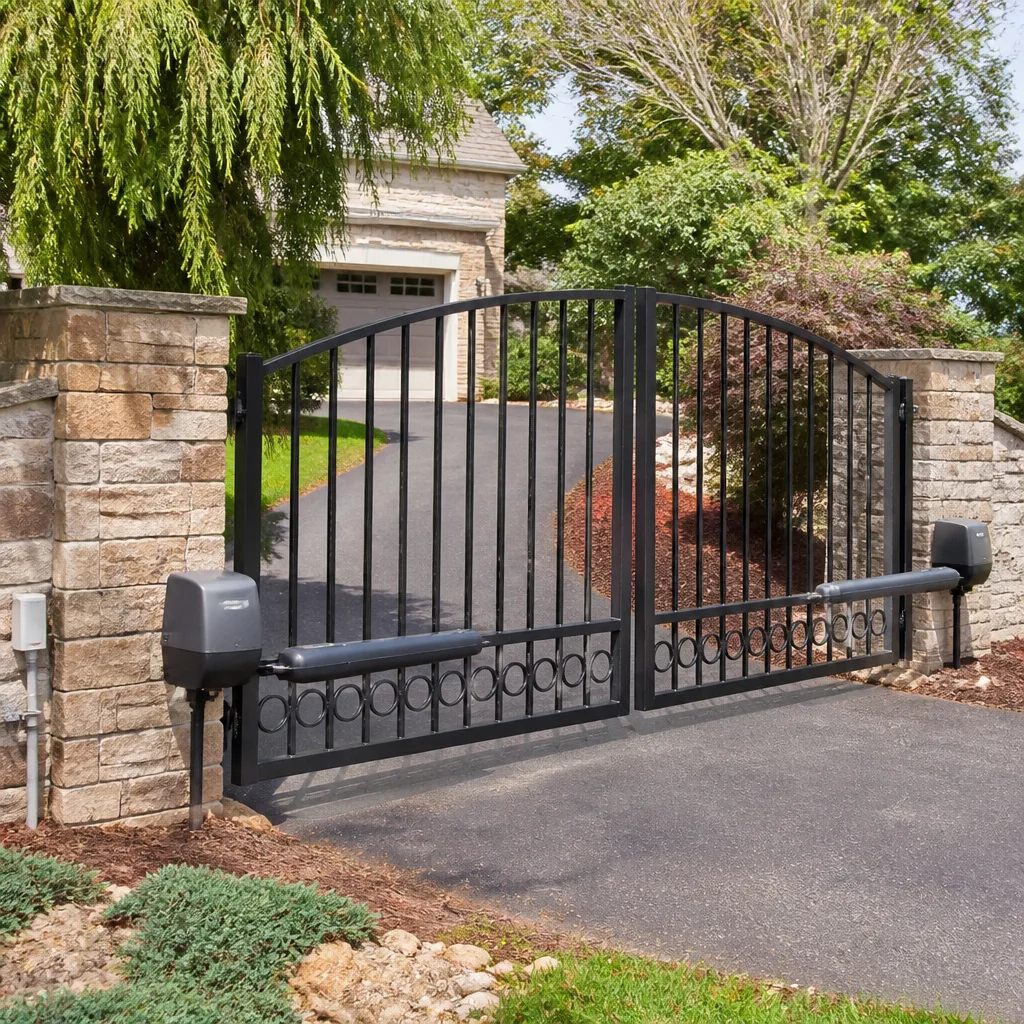
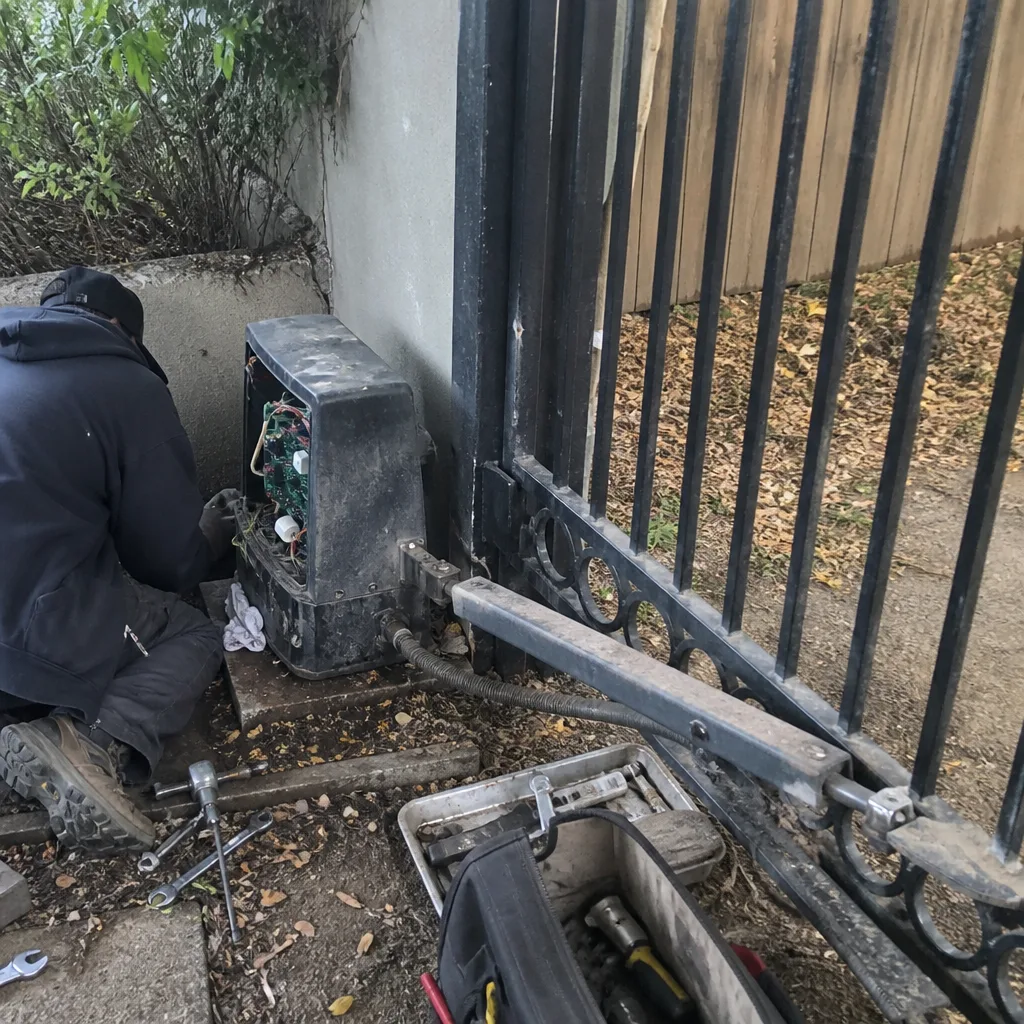 Before
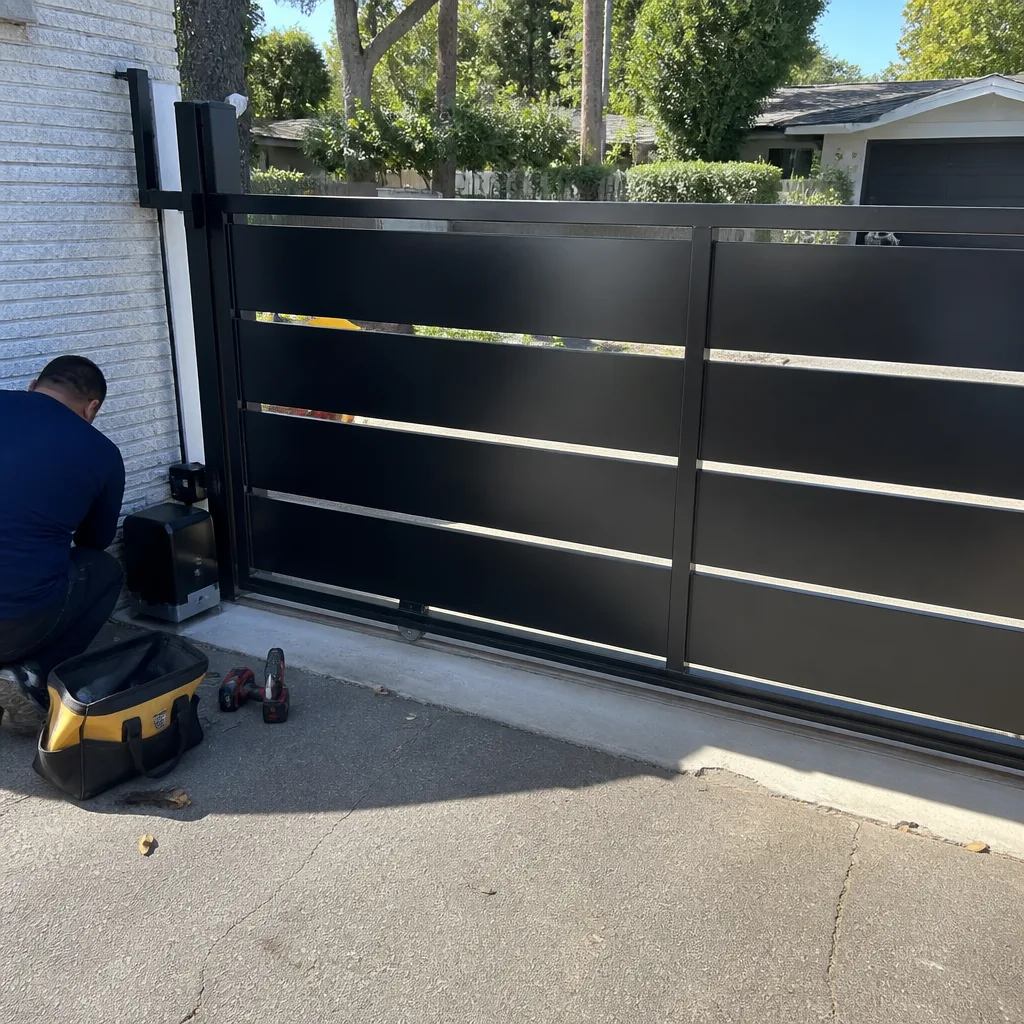 After
After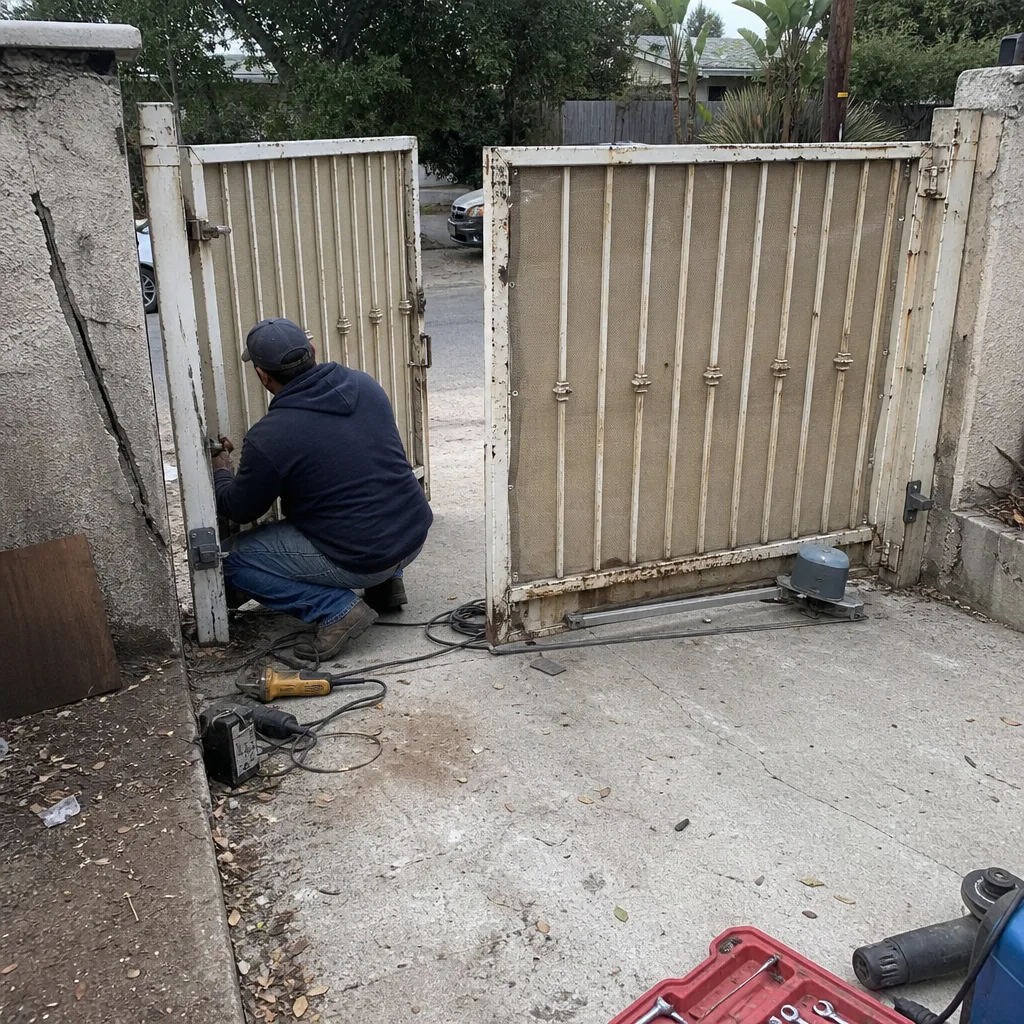 Before
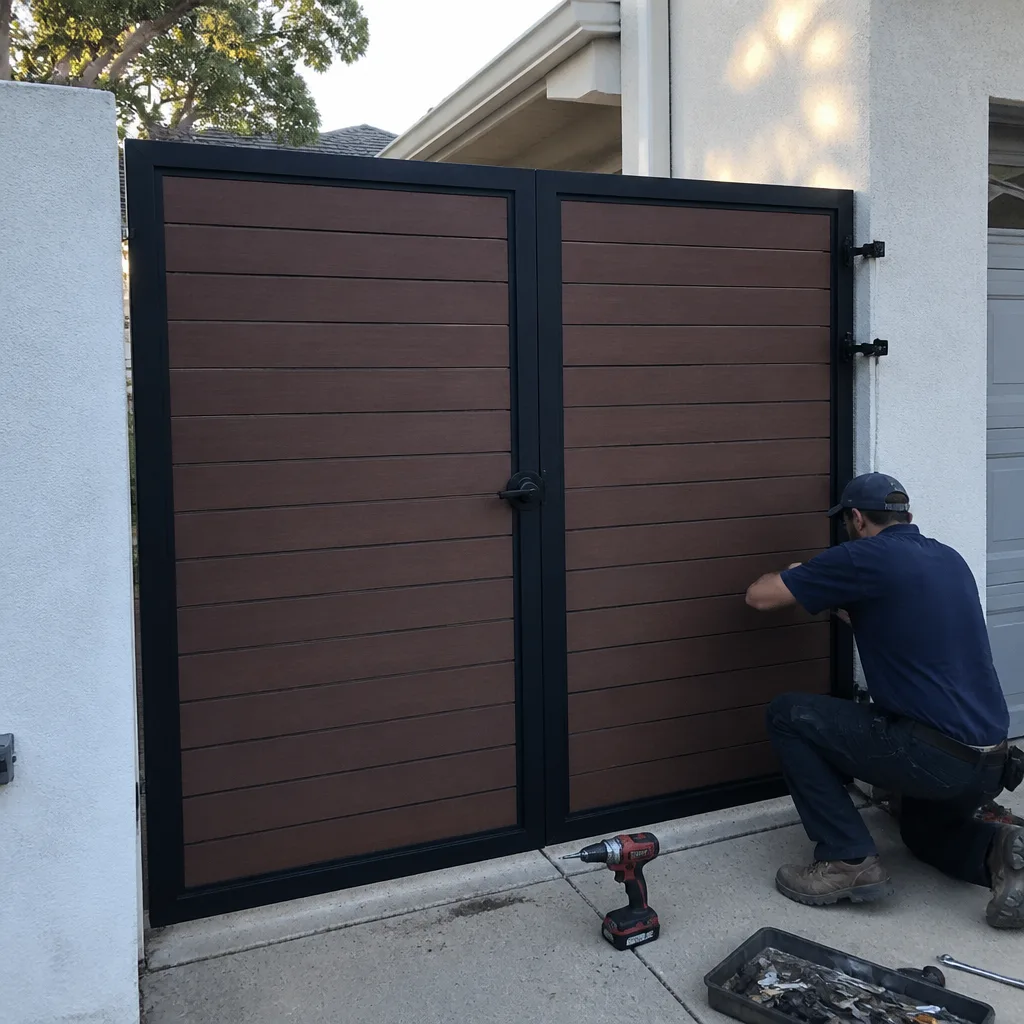 After
After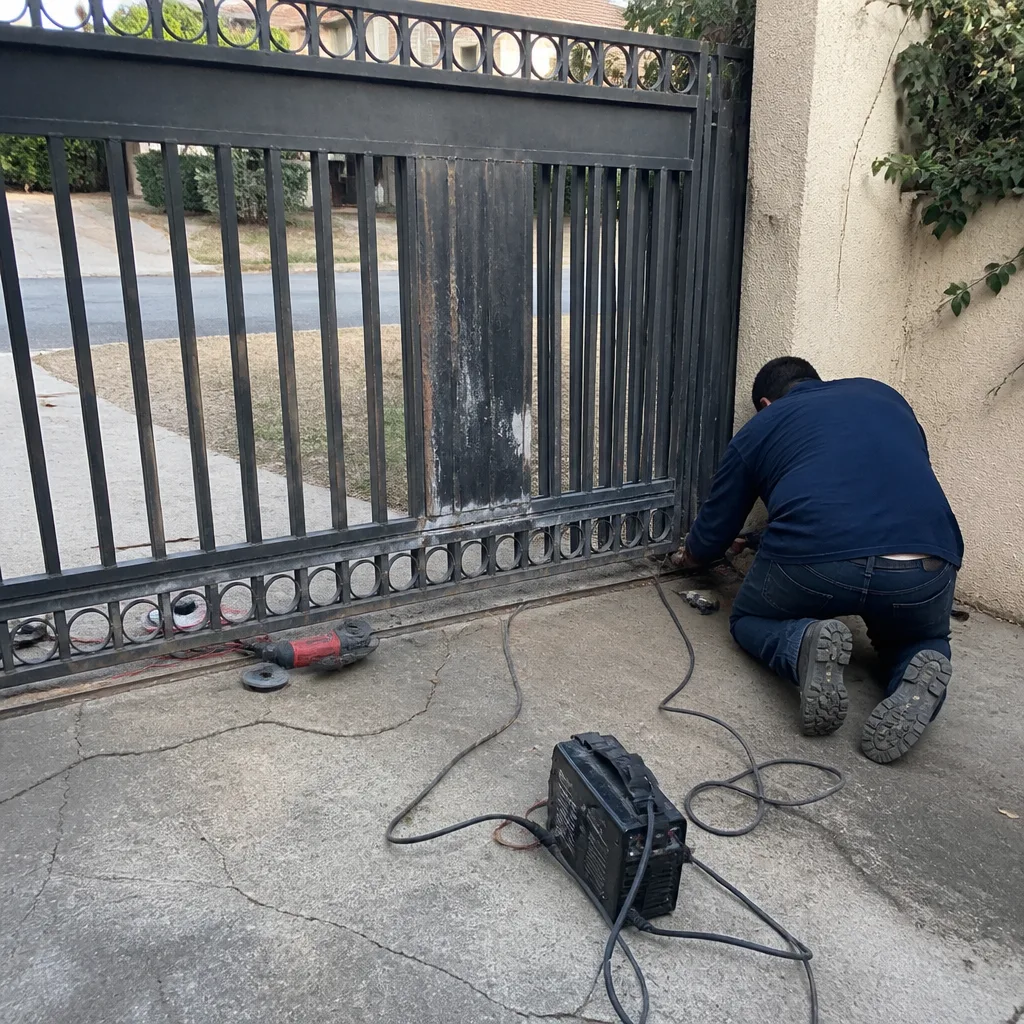 Before
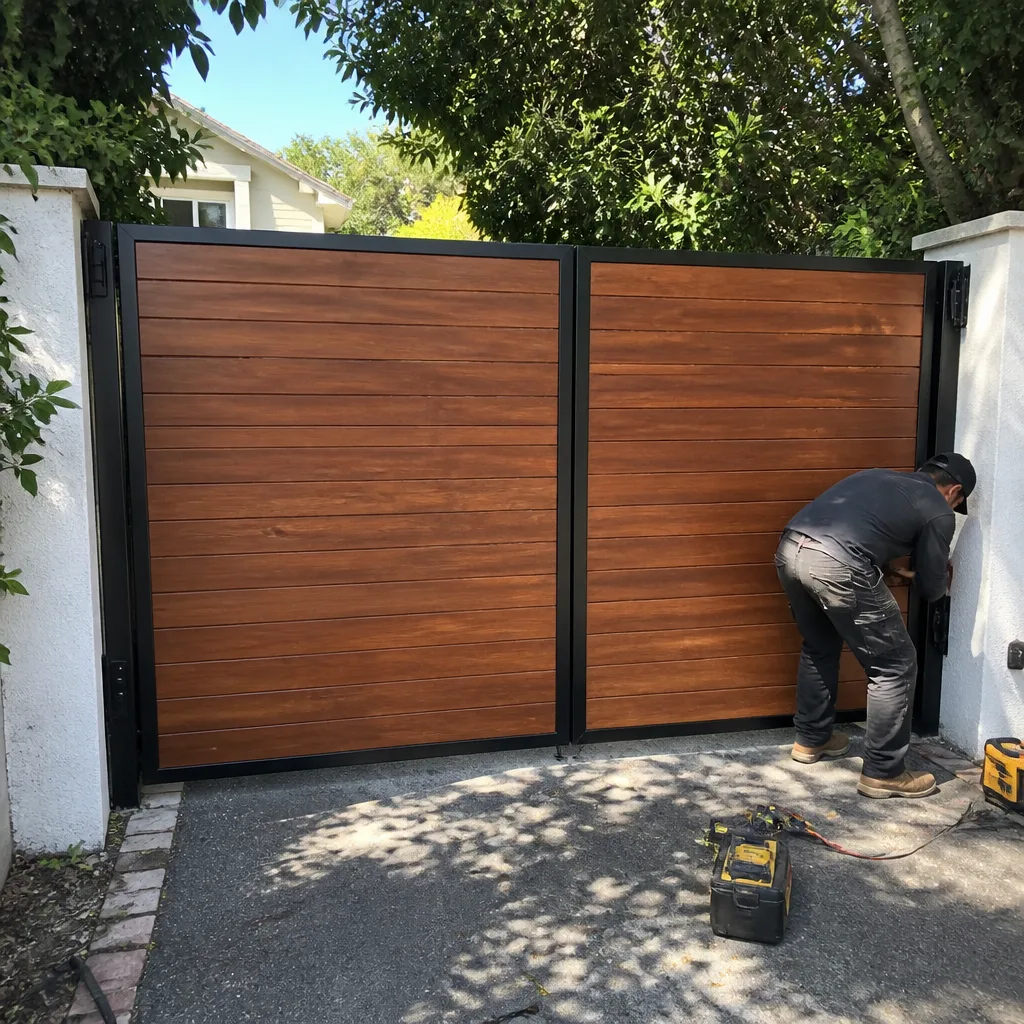 After
AfterSeasonal Gate Repair Care for Sherman Oaks: Year-Round Homeowner’s Guide
Most Sherman Oaks homeowners don’t think about their driveway gate until the day it refuses to open. That’s the pattern we see after 42 years in this trade: a gate that worked fine in April stalls in August, or drags in January. The truth is most gate failures aren’t sudden; they’re slow. Months of heat, sprinkler overspray, and deferred lubrication build up until a capacitor gives out on a Tuesday morning. This guide explains what actually degrades a gate in Southern California’s specific climate, what to check each season, and what to leave to a professional.
Quick Answer
Seasonal gate care in Sherman Oaks comes down to four routines: lubricating hinges and rollers every 90 days, clearing debris from tracks and sensor eyes monthly, testing the auto-reverse and safety edges twice a year, and scheduling a professional tune-up once yearly before the hottest stretch of summer. Most gates in this area fail from heat stress, dust accumulation, or sprinkler damage, not from age alone.
Table of Contents
- Why Sherman Oaks Weather Is Hard on Gates
- Spring: The Inspection Season
- Summer: Heat, Motors, and Metal Fatigue
- Fall: Wind, Debris, and Rain Preparation
- Winter: The Season of Slow Failures
- A Monthly Gate Care Checklist That Takes 10 Minutes
- What a Professional Seasonal Tune-Up Actually Includes
- Common Mistakes to Avoid
- When to Call a Professional
- Frequently Asked Questions
- The Bottom Line
Why Sherman Oaks Weather Is Hard on Gates
Sherman Oaks sits in a particular microclimate. It’s not the coastal fog of Santa Monica and it’s not the furnace heat of Woodland Hills. This middle ground creates conditions that stress gate hardware in predictable ways: intense afternoon sun on the south side of the house, evenings that cool quickly in the valley, and Santa Ana wind events that whip through the Sepulveda basin. Each of these plays a role in how a driveway gate wears.
The sun is the biggest factor. A black iron gate facing south or west in Sherman Oaks can reach surface temperatures over 140°F on a July afternoon. That heat doesn’t just burn a hand; it expands the metal, which changes the clearance between the gate leaf and the post. If the clearance is already tight, a gate that clears in the morning can bind by 3 PM. This is one reason we tell homeowners in the foothills north of Ventura Boulevard to test their gates at the hottest part of the day, not just in the morning when the air is cool.
Wind is the second factor. Santa Ana winds push fine dust and grit into roller bearings, chain drives, and limit switch housings. Over time, that grit turns grease into grinding paste. Homeowners near the Sepulveda Dam Recreation Area or along Haskell Creek see more debris in their gate tracks than those on quieter streets, because the open space funnels wind across the properties.
Then there’s the water. Sherman Oaks irrigation systems are notorious for overspray. A sprinkler head that arcs onto a gate post or a control box shortens the life of every electrical component it touches. We’ve seen circuit boards corroded beyond recognition within two years because a sprinkler was pointed at the operator arm. The fix costs less than the diagnosis.
Spring: The Inspection Season
Spring is the right time to take stock. April and May in Sherman Oaks bring mild temperatures and longer daylight, which makes it easier to see rust, cracks, and alignment problems before summer heat makes them worse. A careful spring inspection catches most of what will fail in July or August.
Here’s a five-step spring inspection that works for any driveway gate, whether it’s a swing gate on a hinge post or a slide gate on rollers:
- Check the gate’s rest position. Close the gate fully and stand back. The leaf should sit level and parallel to the fence line. If one corner sags, the hinge post or the hinges themselves are shifting. In Sherman Oaks, where expansive clay soils swell and shrink with seasonal moisture, hinge posts move slightly every year.
- Lift test the gate leaf. With the gate fully closed and the opener disengaged (use the manual release cord or key), try to move the leaf gently by hand. It should move freely with light pressure. If it sticks or groans, the rollers, hinges, or bearings need attention.
- Inspect all fasteners. Wrench-check the bolts on hinges, the operator bracket, and the track. Lock washers fatigue. A loose bolt on a gate opener arm becomes a thrown chain or a stripped gear within a month.
- Check the sensor eyes. Most modern gate openers in Sherman Oaks use photo-eye sensors mounted near the ground on each side of the gate opening. Wipe the lenses with a clean, dry cloth and make sure nothing has shifted the alignment. A misaligned sensor is the single most common cause of a gate that won’t close.
- Lubricate moving parts. Use a penetrating lubricant on hinge pins, roller bearings, and the opener’s drive chain. Use a light grease on the gate track wheels. Do this now, before the dry heat of a Sherman Oaks summer bakes out whatever lubricant survived the winter.
One spring-specific item for Sherman Oaks: check the area around the gate track for roots. Streets with mature ficus and liquidambar trees, common south of the Boulevard, have exactly the kind of root systems that push up concrete and shift gate tracks over time. Roots don’t need a season to grow, but the spring growth flush after winter rains is when they do the most damage.
Summer: Heat, Motors, and Metal Fatigue
Summer is when gates fail in Sherman Oaks. Not because the heat creates new problems, but because it exposes everything that was already marginal. A capacitor on its last legs gives out when the motor runs hot. A tight hinge binds when the metal expands. A battery backup that limped through spring dies on the first 100-degree day.
The two most common summer failures we see are opener capacitors and limit switches. Both fail from heat stress. A capacitor is an electrical component that stores the energy to start the motor; in a Sherman Oaks summer, an operator box mounted in full sun can reach 130°F inside, which degrades the capacitor’s dielectric fluid. Limit switches, which tell the motor when to stop, are mechanical components that wear faster when the metal parts around them expand and contract daily.
What you can do in summer:
- Shade the operator box if possible. A simple awning or a shade-tolerant vine works. But don’t enclose the box fully; it needs air circulation. Enclosed boxes overheat in August.
- Cycle the gate once a week even if you don’t use it daily. Homeowners who leave for a month and let the gate sit frozen in place are the ones who come home to a dead opener. The motor needs to run occasionally.
- Listen for changes in sound. A gate motor that sounds different in June than it did in March is telling you something. A new vibration, a higher pitch, a grinding note; any of these is a warning sign that a bearing or a gear is wearing. In our experience, homeowners who call at the first change in sound pay a fraction of what they’d pay if they waited for the failure.
- Watch for softened grease. Many track-lubricating products liquefy above 100°F and run down the track, leaving the wheels dry. If you see dark streaks below the track in summer, reapply a high-temperature-rated grease.
Summer in Sherman Oaks also brings out the sprinklers. Walk your property in the late afternoon and look at the gate area. If sprinkler overspray is reaching the operator arm, the control box, or the hinge post, adjust the heads now. This is a five-minute fix that prevents hundreds of dollars in electrical repair later.
Fall: Wind, Debris, and Rain Preparation
Fall in Sherman Oaks means two things for gates: Santa Ana winds and the first rain. Both require preparation that most homeowners skip until it’s too late.
Santa Ana winds, which typically begin in October and peak through November, push an enormous amount of fine dust and leaf debris into gate tracks, wheels, and the open seams of operator housings. Fallen leaves from mature sycamores and oaks, common in the neighborhoods west of Sepulveda Boulevard, get crushed into the track and packed into the wheel channels. This is the single biggest cause of fall slide-gate derailments.
Your fall routine should include these three steps:
- Deep-clean the track twice during the fall. Use a stiff brush and a vacuum to remove packed dirt, leaf fragments, and anything in the track channel. Do this once in early October and again after the first Santa Ana wind event. A clean track prevents the majority of roller and wheel failures.
- Clear the area around the gate’s travel path. Anything loose within three feet of the gate’s swing or slide path will end up in the mechanism. In Sherman Oaks, the usual culprits are palm fronds, eucalyptus bark, and the neighbor’s un-bagged clippings.
- Inspect the weather seals and gaskets on the operator box. These dry and crack in summer heat, then let water in during the first real rain. Replace any gasket that’s brittle or no longer seated properly around the housing seams. A tube of weatherproof silicone sealant, properly applied, handles this for another season.
Rain preparation matters more than most homeowners think. Sherman Oaks gets a modest annual rainfall total, but the first real storm of the season typically arrives in November and dumps enough water to saturate the soil. Gates on sloped driveways, especially in the foothills north of Ventura Boulevard, sit in the path of runoff. A gate operator mounted at the low point of the driveway, where water pools, will fail eventually unless it’s mounted with proper clearances and drainage. Check that the operator base is not sitting in the low spot after any real rain.
Winter: The Season of Slow Failures
Winter gate problems in Sherman Oaks are usually quieter than summer failures. They start slowly: a gate that takes an extra second to start, a motor that hums before it engages, a remote that needs two clicks instead of one. These are cold-weather symptoms. They don’t come from freezing temperatures (Sherman Oaks rarely drops below 40°F), but from the moisture and temperature swings that winter brings.
The three winter issues we see most:
- Condensation inside the operator box. Warm days and cold nights create condensation on the inside of the housing. Moisture collects on circuit boards and terminals. Over the course of the winter, that moisture causes corrosion and erratic behavior. The fix is proper sealing and, in some cases, a desiccant pack inside the housing.
- Wet soil affecting the gate posts. Winter rain soaks the clay soil that most Sherman Oaks homes sit on. The soil swells, shifting gate posts slightly. A gate that was perfectly aligned in August may drag or bind by January. This is not a repair you can do yourself; shifting posts need professional adjustment and sometimes re-setting.
- Battery backup failure. More Sherman Oaks homeowners have battery backup systems on their gate openers than they did ten years ago. These batteries lose capacity in cold weather. A battery that works fine in August may be dead by February. If your gate has a backup battery, test it by killing power to the opener and cycling the gate. If it doesn’t open, replace the battery.
Winter is also the season to pay attention to your gate’s manual operation. If the power goes out and the battery backup fails (or you don’t have one), you’ll need to open the gate by hand. The manual release is usually a keyed cylinder or a pull cord on the operator arm. In January, with wet hands and cold metal, this is when you find out whether the manual release is maintained. We recommend testing it once every six months, regardless of season. A homeowner who can’t manually open their own gate is trapped in their driveway, which is a situation most people only experience once before they fix it for good.
A Monthly Gate Care Checklist That Takes 10 Minutes
Most gate maintenance is monitoring. The earlier you notice a change, the cheaper and simpler the fix. Here’s a ten-minute monthly routine that works year-round in Sherman Oaks:
- Listen to the gate cycle twice. Stand next to the opener while the gate opens and closes. Note any new sound: grinding, squealing, clicking, humming. Write it down or make a mental note. A change in sound is the earliest warning sign of most opener failures.
- Watch the gate move. Does it start smoothly or jerk? Does it slow down at the same points? A gate that hesitates at the same place every cycle has a mechanical problem at that point; likely a bent track section or a tight hinge.
- Wipe the sensor lenses. This takes fifteen seconds per sensor. Dust and sprinkler residue build up quickly in Sherman Oaks, especially on windy days.
- Check the gap between the gate and the post. A gap that changes from month to month means the posts or hinges are shifting. Note the measurement and compare it over time.
- Clear debris from the gate path. Leaves, twigs, palm fronds, whatever is in the way. A slide gate will grind debris into its track; a swing gate will drag it across the driveway.
- Test the auto-reverse. Some gates have a pressure-sensing auto-reverse. Place a small object (like a traffic cone or a piece of lumber) in the gate’s path and close the gate. It should reverse on contact before the object is crushed. If it doesn’t, this is a safety issue, not just a maintenance item. Fix it immediately.
That’s it. Ten minutes once a month saves more repair dollars than anything else we can recommend. Most of our expensive repair jobs in Sherman Oaks are on gates that were ignored for years.
What a Professional Seasonal Tune-Up Actually Includes
There’s a difference between what a homeowner can do with a can of lubricant and what a professional should handle. The homeowner job is monitoring and basic lubrication. The professional job is adjustment, calibration, and component inspection. This is why we offer an $89 Seasonal Tune-Up: it’s a structured service, not a once-over.
Here’s what a proper gate tune-up includes, and why each step matters:
- Hinge and bearing adjustment. Hinges on a swing gate wear asymmetrically. The top hinge carries the pull; the bottom hinge carries the weight. A professional adjuster sets the leaf height and the reveal (the gap between leaf and post) so the gate doesn’t bind in heat or drag in wet soil. This is precise work that requires shims, wrenches, and experience with Sherman Oaks soil conditions.
- Track and wheel service. Slide gate wheels and track wear together. If the wheels are worn but the track is bent, replacing the wheels only is a waste of money. A tune-up includes wheel inspection, track straightening or replacement, and proper alignment so the gate doesn’t crab.
- Opener torque and limit calibration. This is where most DIY maintenance goes wrong. Torque controls how hard the opener pushes; limit controls how far it travels. Both need to be set precisely for your specific gate and motor. An overtightened torque setting will break the gate; an under-tightened one will stall the motor. This is not a task for trial and error.
- Electrical inspection. The tune-up checks the capacitor, the transformer, the wiring connections, and the battery (if equipped). Loose terminals and corroded connections are the hidden causes of intermittent gate problems. A technician with a multimeter finds these in minutes; a homeowner can’t.
- Safety system testing. Photo eyes, safety edges, and auto-reverse are tested with calibrated forces. A gate must reverse at a specific pressure to be safe and code-compliant. This matters in Sherman Oaks, where every driveway gate that serves a residential property must meet relevant safety standards.
The $89 Seasonal Tune-Up is not a loss leader. It’s the service that catches the $12 capacitor failure before it becomes the $700 motor replacement. We’ve seen it too often to count: a homeowner skips the tune-up to save $89, then pays ten times that when the neglected component takes out a motor.
Common Mistakes to Avoid
- Lubricating everything with WD-40. WD-40 is a solvent, not a long-term lubricant. It cleans and penetrates, but it doesn’t provide lasting protection for hinges, bearings, or chains. Using it as a lubricant is the fastest way to strip out the grease that was already there. Use a penetrant for cleaning and a proper lubricant or grease for lubrication.
- Ignoring a slow gate. A gate that moves slower than it did last month is telling you something. It could be a dying battery, a binding hinge, or a struggling motor. The longer it runs in a degraded state, the more components it damages. A slow gate is never a normal gate.
- Spraying lubricant on the gate track. On slide gates, the wheels don’t need a lubricated track. Greasing the track turns it into a paste trap: dust, grit, and leaves stick to the grease, and the wheels grind through it. The track should be clean and dry. Lubricate the wheel bearings, not the track surface.
- Adjusting the opener force to fix a binding gate. When a gate binds and the opener stalls, some homeowners respond by turning up the force setting on the motor. This overcomes the binding, but it also overdrives the gate into whatever is blocking it. The result is a bent gate leaf, a broken hinge, or a damaged motor. If the gate is binding, fix the binding. Don’t tune the motor to brute-force the gate open.
- Waiting until the gate fails to call for help. In Sherman Oaks, gates fail most often in July, when heat stress peaks, and in November, during the first big wind and rain event. Both are predictable, and both are preceded by weeks of warning signs. Homeowners who call at the first sign of trouble get fixed in a single visit. Homeowners who wait get a bigger repair, a longer wait, and a worse bill.
- Painting over rust without treating it. A rust spot on a Sherman Oaks gate is almost always rusting from the inside, where moisture has been trapped against the metal. Painting over it seals the moisture in and lets the rust continue underneath the paint. Surface rust needs to be removed, treated, and primed before it’s painted. If the rust has thinned the metal, it needs to be welded or patched first.
When to Call a Professional
Some gate jobs are homeowner work. Others need a professional. Here’s the dividing line: if it involves electricity, load-bearing structure, or calibrated safety systems, it’s a professional job. That means opener electrical repair, hinge or post replacement, track replacement, welding, and any adjustment to force settings or limits. High-tension springs, such as those on some cantilever gate assemblies, are dangerous; a spring under tension can release suddenly and cause serious injury. Do not attempt to remove or adjust a gate spring yourself.
If your gate won’t open, is making a sound you’ve never heard before, or has visible structural damage, call someone who does this every day. A gate that fails and falls in the wrong direction is a heavy piece of steel. Ironworks Gate Co. offers free estimates in Sherman Oaks, and a live person answers the phone every hour of every day. Call (925) 590-4289. We’ll come out, look at what you have, and give you a written price before any work begins. Done right, backed in writing, and we’ll be there when we say.
Frequently Asked Questions
A seasonal gate tune-up with Ironworks Gate Co. costs $89 in Sherman Oaks. That’s a flat price for the full service: hinge and bearing adjustment, track and wheel inspection, opener torque and limit calibration, electrical inspection, and safety system testing. If we find something that needs more than adjustment, the repair price is quoted and agreed upon before we start the work. Call (925) 590-4289 to schedule yours; estimates are always free.
Once a year is the right schedule for most Sherman Oaks driveway gates. A yearly tune-up catches normal wear before it fails, especially before summer heat and fall wind seasons. Gates that see heavy daily use (more than 20 cycles per day) may need service twice a year. Gates with battery backup should have the battery tested during each tune-up.
The most common cause of sagging in Sherman Oaks is shifting soil under the hinge post. Clay soils in this area swell with winter moisture and shrink in summer drought, which slowly tilts the post. The fix is not simply tightening the hinges; the post needs to be re-set or the hinges need shimming to re-level the gate leaf. This is a professional repair in most cases.
We service nine major gate automation brands in Sherman Oaks: LiftMaster, FAAC, BFT, Linear, Viking, Ghost Controls, DoorKing, Elite, and Mighty Mule. If your opener is one of these, we carry or can quickly source the parts needed for most repairs. If you have a different brand, call us anyway; we’ll tell you honestly whether we can fix it or point you to someone who can. Call (925) 590-4289 for a straight answer.
A properly installed and maintained gate opener motor in Sherman Oaks typically lasts 8 to 12 years, though some run longer. Heat stress shortens this significantly if the operator box is mounted in full sun without adequate ventilation, if the gate is binding and overworking the motor, or if the opener was under-specified for the gate’s weight. A yearly tune-up is the single best thing you can do to extend motor life.
Most gate repairs can be completed in a single visit, and many of our Sherman Oaks repair jobs are handled the same day the homeowner calls. Our technicians arrive with common parts and tools for the nine brands we service, which means far fewer second trips. If the repair requires an ordered part, we’ll tell you when to expect it and we’ll come back as soon as the part lands. Call (925) 590-4289 and a live person will give you a straight answer about timing.
The Bottom Line
A gate in Sherman Oaks needs four things to last: regular lubrication, clean tracks and sensors, calibrated safety systems, and a yearly professional inspection. Skip any one of these and the gate will fail eventually, usually at the worst possible moment. This climate is hard on gates: the heat, the wind, the dust, and the shifting clay soil all work against your gate every day. Ten minutes a month of homeowner attention, plus a yearly tune-up at $89, is the cheapest gate insurance there is. If something ever looks or sounds wrong, call (925) 590-4289. We’ve been doing this work for over 42 years, and we’ll be here when you need us. The company that makes a 40-year-old gate close like the day it was hung.
Written by Victor Salinas, Owner at Ironworks Gate Co., serving Sherman Oaks since 2013.
Learn more about what we do at Ironworks Gate Co. home.